
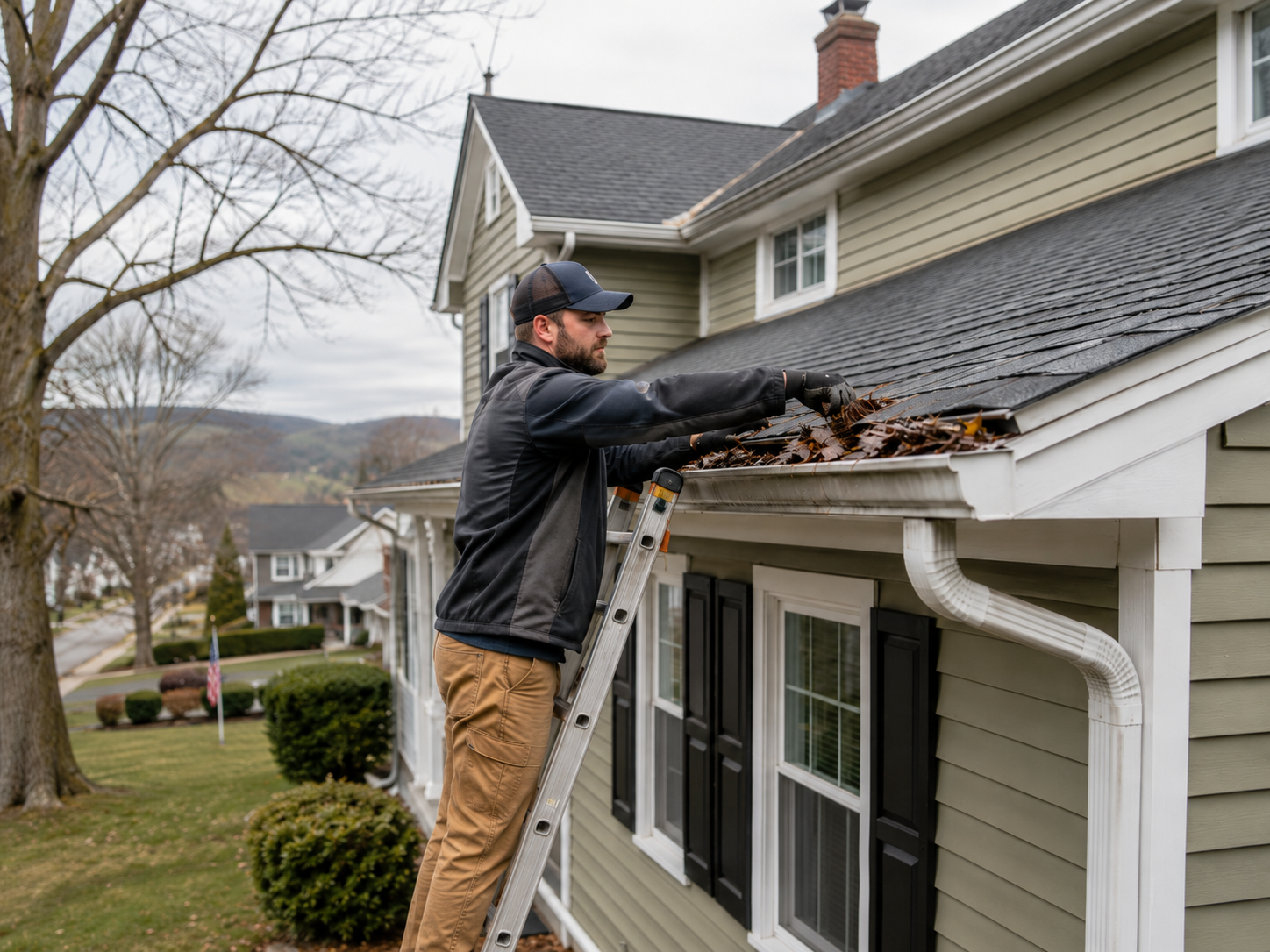
Gutter Maintenance for NEPA Homes: Prevent Water Damage
Gutters are a home’s first line of defense against water damage. When they work, rain and snowmelt flow away from the roof and foundation. When they clog, water backs up and finds its way into the places that cost the most to repair. Gutter and drainage problems are also among the most common findings in a home inspection.
In Northeastern Pennsylvania, that risk runs higher than in milder climates. Dense tree cover drops heavy leaf litter every fall, snow loads the roofline, and freeze-thaw swings turn standing water in a gutter into ice within hours.
This guide explains how clogged gutters cause bigger problems, gives you a simple seasonal checklist, and shows what an inspector looks for. Updated August 2026.
How do clogged gutters lead to bigger problems?
A clogged gutter does not stay a small problem. Water that cannot drain has to go somewhere, and it moves toward the parts of the house you least want it to reach.
- Ice dams and ice weight: Ice dams form when attic heat melts rooftop snow that refreezes at the cold eaves, forcing water back under the shingles. InterNACHI notes that gutters do not cause ice dams, but they concentrate the ice in a vulnerable spot, where the weight can tear gutters and fascia away from the house.
- Fascia and soffit rot: Overflowing water runs down the boards behind the gutter. Over time that wood softens, rots, and pulls the gutter loose.
- Foundation and basement water: Water that spills over the edge lands next to the foundation. It saturates the soil, seeps into the basement, and can crack the foundation as the ground shifts.
Each of these starts with the same cause. A gutter that cannot carry water away turns a normal rainstorm into a slow leak somewhere in the house. For a deeper look at how winter drives the worst of it, see how ice dams form and the damage they cause.
What is a simple seasonal gutter checklist?
Gutter maintenance is easier when you tie it to the seasons. NEPA’s weather gives each season a specific job.
Spring
- Clear out seeds, buds, and debris that built up over winter.
- Check for damage from ice and snow load, such as sagging or pulled-away sections.
- Confirm downspouts drain freely after the thaw.
Summer
- Flush gutters with a hose to check the flow and find slow spots.
- Trim back branches that drop leaves and debris onto the roof.
- Look for rust, separated seams, or loose fasteners while the weather is dry.
Fall
- Clean gutters after the leaves drop, which is the most important cleaning of the year in NEPA.
- Consider gutter guards if heavy leaf fall clogs your gutters every year.
- Clear downspouts and extensions before the first freeze so meltwater has a path.
Doing these small checks on a schedule prevents the large repairs that come from neglect.
What do inspectors notice about gutters and drainage?
Gutters are a standard part of a home inspection. Under the InterNACHI Standards of Practice, the inspector inspects the gutters and downspouts along with the roof covering, and evaluates surface drainage and grading where they may affect the structure through moisture intrusion.
An inspector flags gutter and drainage problems because they point to water damage risk. Common findings include:
- Clogged, sagging, or separated gutters, or gutters sloped so water stands instead of draining.
- Downspouts that dump water right next to the foundation.
- Water stains on fascia, soffits, or the exterior wall.
- Grading that slopes toward the house instead of away from it.
An inspector documents these findings with photos but does not clean or repair the gutters. That is the buyer’s cue to price the fix or ask the seller to handle it before closing. Gutter and drainage issues often connect to the roof, so see our guide on common roof problems and how to spot them for how these overlap.
How do downspouts and grading keep water away from the foundation?
Clean gutters are only half the system. The water still has to travel away from the house, and that is the job of downspouts and grading. InterNACHI’s guidance on gutters and downspouts calls for splash blocks or downspout extensions so runoff does not pond next to the foundation.
Downspouts should carry water several feet away from the foundation, not drop it at the base of the wall. If your downspouts feed an underground drain, confirm the line is clear and pitched to daylight, because a buried drain that clogs or freezes sends water right back toward the foundation.
Grading matters just as much. The ground should slope away from the house so surface water drains outward. When soil settles and slopes back toward the foundation, even clean gutters cannot stop water from pooling against the wall. For a season-by-season routine that covers this and the rest of the house, see our home maintenance checklist.
When do gutter issues signal roof or structural concerns?
Sometimes a gutter problem is the visible edge of a larger one. The repairs behind these signs, a new fascia board, a re-flashed roof edge, or a waterproofed foundation, cost far more than a gutter cleaning. Knowing the difference tells you when to call a professional.
- Gutters pulling away from the roofline, which can mean the fascia behind them has rotted.
- Large icicles and heavy ice buildup at the eaves every winter, which point to ice dams and attic heat loss.
- Water stains inside the home below the roofline, which suggest water is already getting in.
- Persistent basement moisture after rain, which ties drainage to the foundation.
If you see these, the gutters are telling you to look at the roof and structure. Winter is when they show up most, so review how snow and ice damage a NEPA roof before the season starts. If you suspect water has already gotten in, learn how to spot signs of previous water damage in your NEPA home.
Buying or selling a home in Northeastern Pennsylvania? A Mountain to Valley home inspection covers the roof, gutters, drainage, and grading so you know where the water goes. Schedule your inspection by calling 570-899-3255.
FAQs
How often should I clean my gutters in NEPA?
At least twice a year, in spring and fall. The fall cleaning after the leaves drop is the most important one in Northeastern Pennsylvania.
Can clogged gutters really cause foundation damage?
Yes. When gutters overflow, water pools next to the foundation, saturates the soil, and can seep into the basement or crack the foundation over time.
Are gutters included in a home inspection?
Yes. Under the InterNACHI Standards of Practice, the inspector inspects the gutters and downspouts as part of the roof, along with grading and surface drainage that may affect the structure.
Do gutter guards eliminate the need to clean gutters?
No. Guards reduce how often you clean, but they do not remove the need entirely. You still need to check the flow and clear fine debris, especially in heavy leaf areas.
Do clogged gutters cause ice dams?
Not directly. Ice dams form when attic heat melts rooftop snow that refreezes at the cold eaves. Clogged gutters make the situation worse by concentrating ice at the roof edge, where the weight can damage gutters and fascia.

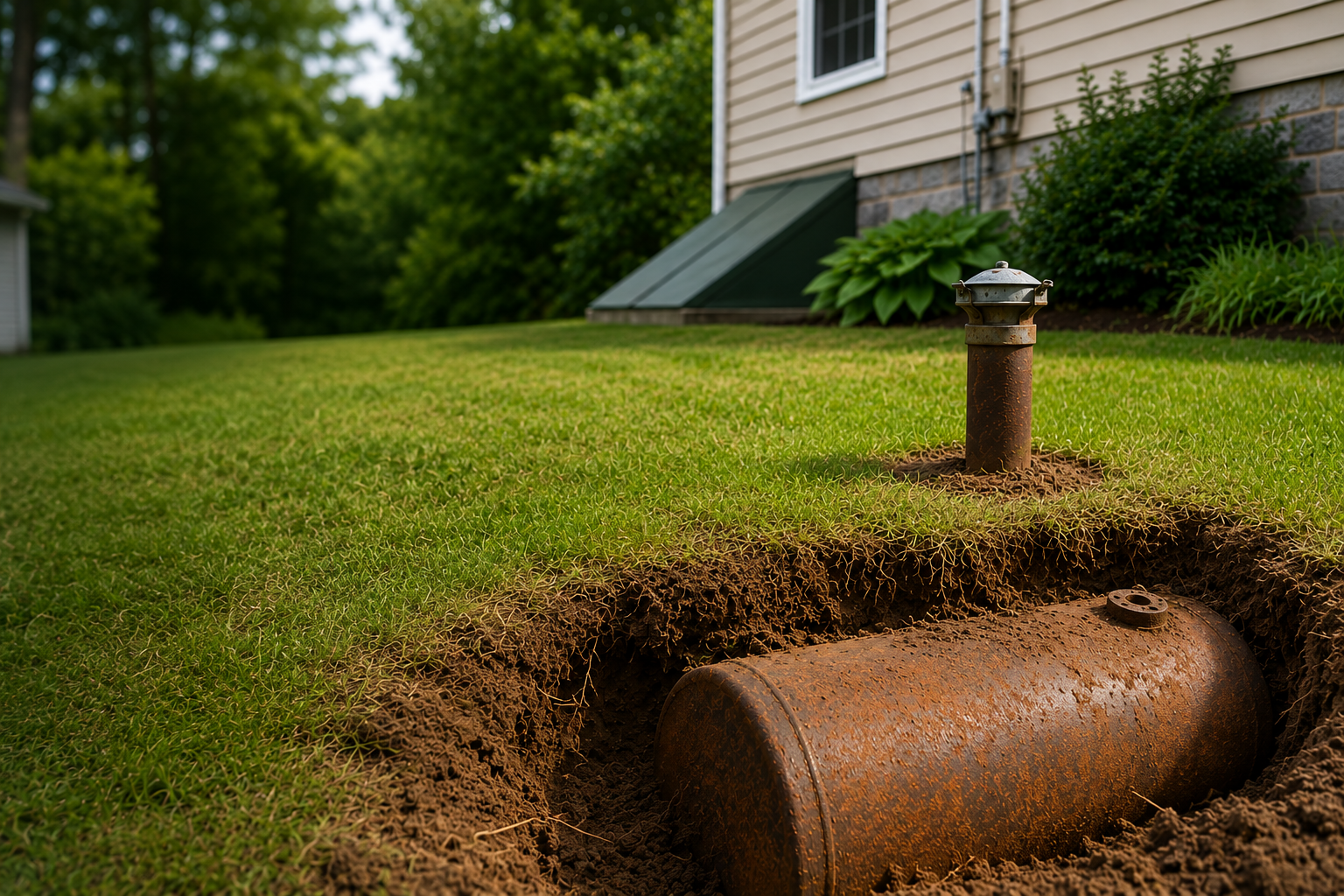
Buried Oil Tanks in NEPA Homes: What Buyers Need to Know
Many older homes in Northeastern Pennsylvania were once heated with oil, and some still have the storage tank buried in the yard. A standard home inspection does not locate or test buried oil tanks, and a buyer can inherit the cleanup liability the day the deed transfers.
Here is the core problem. The U.S. Environmental Protection Agency excludes tanks storing heating oil used on the premises from federal underground storage tank rules. That means no required leak detection, no corrosion protection, and no monitoring. A buried tank can sit and rust for decades with no one watching it.
This guide explains why so many NEPA homes have these tanks, how to spot the signs, what a leak can cost, and how to protect yourself before you close.
Why do many older NEPA homes have underground storage tanks?
Northeastern Pennsylvania has a large stock of homes built during the coal and oil heating era. Many were built before natural gas service reached every street, so oil heat was the practical choice for decades.
When owners later converted to gas or electric, the old underground tank was often left in place rather than removed. The tanks are usually steel; they typically hold a few hundred to about a thousand gallons, and steel corrodes underground. That is small enough to disappear under a lawn or driveway, which is why so many go unnoticed at the time of sale.
The result is a hidden liability. The Pennsylvania Department of Environmental Protection warns that heating oil releases can pollute drinking water supplies, contaminate soils, and expose the tank owner to liability if neighboring properties are affected. An abandoned tank may still hold old oil and sludge.
Buried tanks are one of several risks that come with the region’s older housing stock. For the broader list, see our guide on buying an older home in NEPA and 9 common issues to look for.
What are the signs a property may have a buried or abandoned tank?
You often cannot see the tank, but you can see its clues. Look for signs at the house and in the yard.
- A fill pipe or vent pipe sticking out of the ground or the exterior wall.
- Capped or disconnected copper lines running through the basement or foundation.
- An old furnace or boiler that once ran on oil, or a patched area where equipment was removed.
- A round metal cap or a small unexplained pipe in the lawn, or a patched or sunken area of the yard.
- Records, permits, or delivery tags that mention oil heat.
If the home now has gas or electric heat but shows any of these signs, ask the seller directly whether a tank was ever removed and request the paperwork. A tank that was never properly closed is still a risk.
What is the real cost of a leaking oil tank?
A release is expensive, and the cost usually lands on the property owner. The Pennsylvania DEP notes that cleanup costs are often not covered by typical homeowner’s insurance policies, and a release that affects a neighbor’s property adds liability on top of the cleanup.
The state offers limited help. Pennsylvania’s Underground Heating Oil Tank Cleanup Reimbursement Program covers tanks of 3,000 gallons or less. It carries a $1,000 deductible and reimburses remaining eligible costs up to $4,000 per tank, which rarely covers a full soil cleanup.
A known or suspected tank also affects resale. Lenders and future buyers ask the same questions you should be asking now, so an unresolved tank follows the property until someone deals with it.
How are buried tanks located and evaluated?
A standard home inspection evaluates the readily accessible and visible parts of a house. Locating a hidden tank is environmental work, and a home inspection does not include excavation, soil testing, or scanning the ground. An inspector can and should note surface clues such as a fill pipe or capped oil lines.
When a tank is suspected, a qualified environmental professional locates it, checks whether it still holds product, and evaluates whether a release has occurred. The DEP recommends contacting at least two reputable environmental professionals when planning to decommission or remove an underground tank.
If the tank stays in the ground, confirm the fill pipe and vent line are removed or grouted so no one can accidentally deliver oil to it, and notify the last known delivery company that the tank is out of service. If contamination is observed or suspected, notify the regional DEP office.
What questions should you ask the seller before you buy?
Put the tank question directly to the seller during the inspection period, in writing where possible.
- Has the property ever had oil heat, and where was the tank located?
- Was the tank removed or closed in place, and is there paperwork for the work?
- Was any soil testing done at removal, and what were the results?
- Have there been any oil deliveries, spills, or cleanup actions on the property?
- Will the seller agree to a tank locate, removal, or cleanup credit as part of the sale?
Make removal, decommissioning, or a cleanup credit part of your purchase negotiation. A buried oil tank is not always a reason to walk away. It is a reason to investigate and to negotiate with full information.
How does this tie into Phase I environmental due diligence?
Buried tanks are exactly the kind of risk a Phase I Environmental Site Assessment is designed to catch. A Phase I researches the property’s history, past land uses, and environmental records, which is the right tool when a buried tank or other legacy contamination is suspected.
Old heating oil tanks behind homes and commercial buildings are among the most common findings in NEPA assessments. To understand how the process works, read what an Environmental Phase 1 Assessment is and whether you need one. For commercial or mixed-use purchases, the tank question belongs inside the broader commercial realty due diligence process.
Buying an older home in Northeastern Pennsylvania? Mountain to Valley Home Inspections provides Phase I Environmental Site Assessments and can help you evaluate environmental risk before you close. Call 570-899-3255.
FAQs
Does a home inspection include checking for a buried oil tank?
No. A standard home inspection covers visible and accessible components. Locating a buried tank requires environmental work such as a Phase I Environmental Site Assessment, not a general inspection.
Are residential heating oil tanks regulated?
The EPA excludes tanks storing heating oil used on the premises from federal underground storage tank rules. State or local agencies may still have requirements, which is why paperwork on any removal matters.
Who pays to clean up a leaking oil tank?
The property owner is responsible. Pennsylvania’s reimbursement program helps with eligible costs after a $1,000 deductible, up to $4,000 per tank, but the DEP notes most costs are not covered by standard homeowner’s insurance.
Can I leave a buried tank in the ground?
Sometimes a tank can be closed in place by emptying it and grouting the fill and vent lines, but that decision belongs to a qualified environmental professional. An abandoned tank that still holds oil remains a risk.
Should a buried oil tank stop me from buying the home?
Not necessarily. It should become part of your negotiation. Knowing the tank exists lets you require removal, decommissioning, or a price credit before you close.
[/vc_column_text]