
The six warning signs of unsafe wiring are flickering or dimming lights, breakers that trip often, a burning smell or discolored outlets, outlets or switches that spark, switch plates that feel warm, and rodent damage to wires. Any one of them in an older Northeastern Pennsylvania home is reason to have the electrical system evaluated, and most buyers first learn about the problem during a home inspection.
The timing matters right now. Electrical problems surface in heating season, when space heaters, electric blankets, and holiday lighting push old circuits past what they were built to carry, and national fire data show home electrical fires peak in winter. This guide explains why older NEPA homes carry higher electrical risk, the six signs, why fall exposes them, what an inspection checks versus what needs an electrician, and the insurance and financing problems outdated wiring creates.
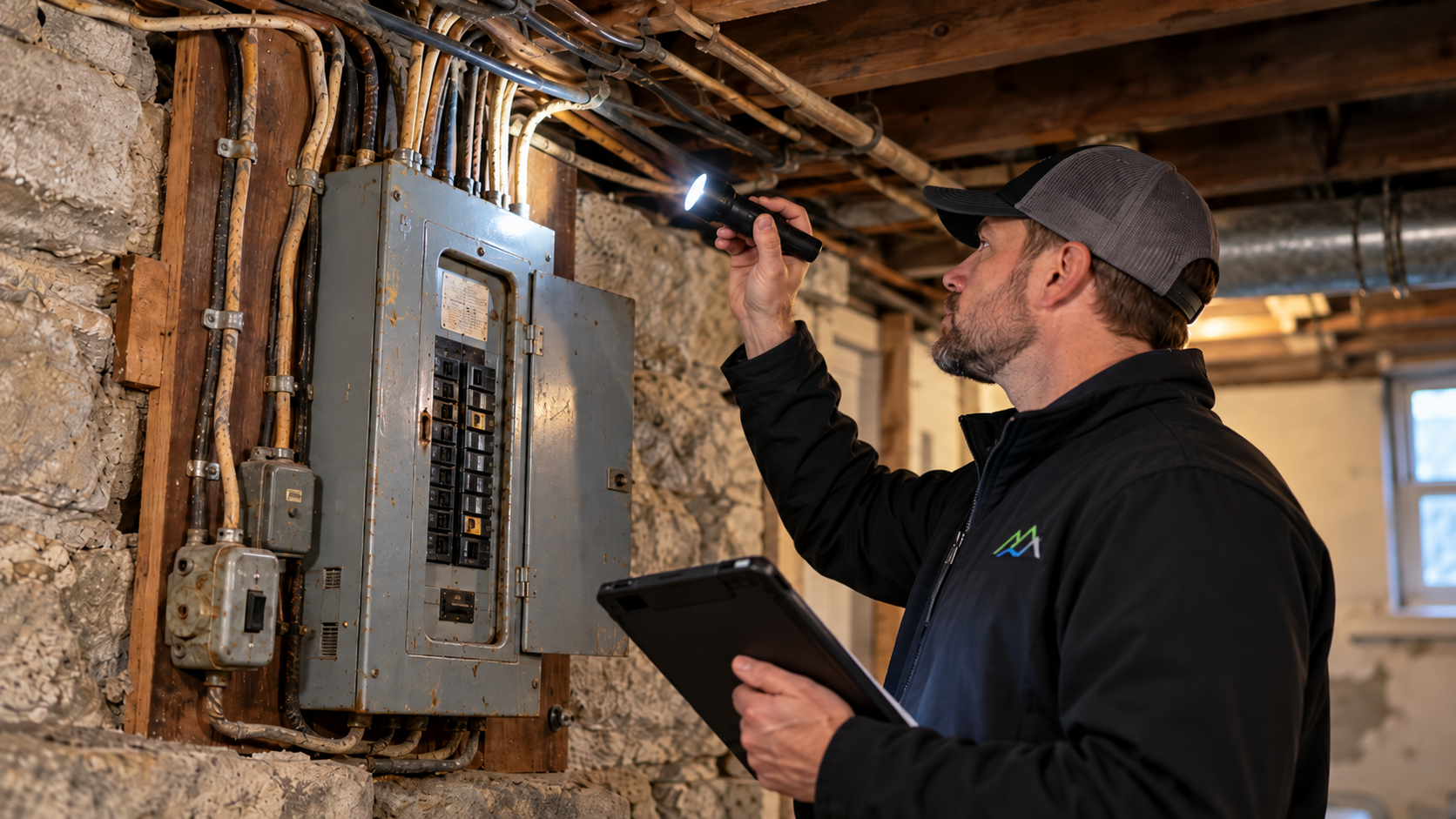 Why do older NEPA homes carry higher electrical risk?
Much of the region’s housing was built between the coal boom and the 1960s, which means wiring methods that were standard then are hazards now.
- Knob-and-tube wiring. InterNACHI notes that knob-and-tube was the standard wiring method from about 1880 to the 1940s. It has no ground, its insulation grows brittle with age, and it was designed to shed heat into open air, so blown-in attic insulation traps heat around it. Unsafe amateur splices are also far more common with knob-and-tube than with modern wiring.
- Aluminum branch wiring. Installed in many homes in the 1960s and 1970s when copper prices spiked. Aluminum expands and loosens at connections, which can overheat. InterNACHI’s standards call for inspectors to report solid aluminum branch-circuit wiring whenever it is observed.
- Fuse panels and undersized service. A 60-amp fuse panel was adequate for a 1940s household. Oversized fuses installed to stop nuisance blowing let wires carry more current than they were made for.
- Ungrounded two-prong outlets and missing GFCI protection. Common in the kitchens, baths, basements, and garages of older homes, where water raises the shock risk.
The fire data back this up. NFPA reports that electrical distribution and lighting equipment were involved in an estimated 32,620 home fires per year from 2015 to 2019, causing an average of 430 deaths and 1,070 injuries annually, with wiring and related equipment accounting for the majority of those fires. Wiring is one of several age-related issues covered in buying an older home in NEPA, 9 common issues to look for.
The 6 signs your wiring is not safe
Each sign below stands on its own. One is enough to call for an evaluation, and two or more in the same home mean the system is telling you something.
1. Flickering or dimming lights
A loose bulb is harmless. Lights that dim when an appliance kicks on, or that flicker across several rooms, point to loose connections, an overloaded circuit, or damaged wiring behind the wall. In a home with knob-and-tube or aluminum wiring, treat it as a warning, not a quirk.
2. Breakers that trip or fuses that blow often
Breakers trip to protect the wire. One trip when a space heater and a microwave share a circuit is the system working as designed. Repeated trips on the same circuit mean the load is too high for the wire or something is shorting. Never replace a fuse with a larger one to stop the problem, because that removes the protection.
3. A burning smell or discolored outlets
A faint smell of hot plastic near an outlet, switch, or the panel means insulation is overheating. Brown or black marks on a cover plate mean it already has. Stop using the circuit and call a licensed electrician the same day.
4. Outlets or switches that spark
A small spark when you plug in a device can be normal. Large, loud, or frequent sparks, or sparks with smoke or a smell, indicate a short or damaged wiring inside the box or the wall.
5. Warm outlets or switch plates
Cover plates should be room temperature. A plate that is warm to the touch is passing more current than the connection can handle, usually because a wire has loosened or insulation has melted.
6. Rodent damage
Mice and squirrels chew wire insulation in attics, basements, and wall cavities and leave bare conductors behind. Droppings near the panel or chewed wire in the attic are enough to call for an evaluation, even if nothing else seems wrong.
Why do wiring problems surface in fall under space heaters and winter loads?
Old wiring fails under load, and NEPA homes carry their heaviest electrical load from October through March. A single space heater draws about 1,500 watts, which is most of what a 15-amp circuit can safely carry on its own. Add an electric blanket, a dehumidifier running in a damp basement, and holiday lights, and circuits built for a few lamps run near their limit for hours at a time.
NFPA’s data show the peak months for home electrical fires fall in winter, with December leading, and that the deadliest fires start while people are home and asleep. Space heaters on extension cords add a second risk. NFPA found that cords and plugs are involved in only about one percent of home fires but seven percent of the deaths, with extension cords dominating that category.
That is why fall is the right time to act on any of the six signs, and why a buyer closing on an older home this season should treat electrical findings as first-tier items. Oil and gas heating equipment in these homes brings its own risks, covered in Does a Home Inspection Include the Furnace?.
What a home inspection checks vs. what needs a licensed electrician
A home inspection is a visual evaluation of the readily accessible electrical system under the InterNACHI Standards of Practice. A licensed electrician goes further. The table shows where one ends and the other begins.
| Component | Home inspector | Licensed electrician |
| Service panel | Removes the dead-front cover and inspects for double taps, scorching, improper breakers, and panel type | Performs load calculations, repairs, and panel replacement |
| Wiring type | Reports visible knob-and-tube and solid aluminum branch wiring | Traces circuits, confirms what is live, and prices remediation |
| Outlets and switches | Tests a representative number for power, grounding, polarity, and GFCI function | Repairs, rewires, and adds circuits |
| Visible wiring in attics and basements | Reports damaged insulation, open splices, and rodent damage | Opens walls and replaces runs |
| Hidden wiring inside walls | Not inspected | Evaluated with testing when a problem is suspected |
The inspection tells you what is there and what needs attention. The electrician tells you what it costs. Keep the electrical findings alongside the roof, heating, and plumbing on the Pennsylvania home inspection checklist when you negotiate. Older homes across the Wyoming Valley, including West Pittston, show these systems often.
Insurance and financing issues with outdated wiring
Outdated wiring is a buyer-cost issue even when nothing has failed. InterNACHI notes that many insurance companies refuse to insure homes with knob-and-tube wiring because of the fire risk, and insurers commonly treat fuse panels and aluminum branch wiring with the same caution. Some require remediation before they will bind a policy, others charge more, and a few decline the home outright.
Lenders follow the insurers. A home you cannot insure is a home you cannot finance. If the inspection finds knob-and-tube, aluminum wiring, or a fuse panel, call your insurance agent before the contingency deadline so you can negotiate the remediation cost, or a credit to cover it.
Next steps
If you own an older NEPA home and see any of the six signs, call a licensed electrician now, before heating season loads the circuits. If you are buying, make the electrical findings part of your inspection contingency and get an electrician’s estimate while the clock is running.
FAQs
Is knob-and-tube wiring illegal in Pennsylvania?
No. Existing knob-and-tube is not illegal to have, but InterNACHI notes many insurers refuse to cover homes that have it, and any modification or addition must meet current code. A licensed electrician should evaluate it before you buy or renovate.
Can I add attic insulation over knob-and-tube wiring?
Not without an evaluation. InterNACHI explains that knob-and-tube was designed to dissipate heat into open air, and insulation around it traps heat and creates a fire hazard. Have an electrician assess the wiring before insulating.
Does a home inspection include the electrical system?
Yes. Under InterNACHI standards the inspector inspects the service panel, reports visible knob-and-tube and solid aluminum branch wiring, and tests a representative number of outlets and switches. Wiring hidden inside walls is not inspected.
Are older homes more at risk for electrical fires?
Yes. Older homes are more likely to have outdated wiring, brittle insulation, ungrounded outlets, and circuits that were never designed for modern loads. NFPA data attribute an estimated 32,620 home fires per year to electrical distribution and lighting equipment.
How often should an older home’s electrical system be inspected?
For homes over 30 years old, have the system evaluated every few years, before major renovations, after you purchase, or any time one of the six warning signs appears.