
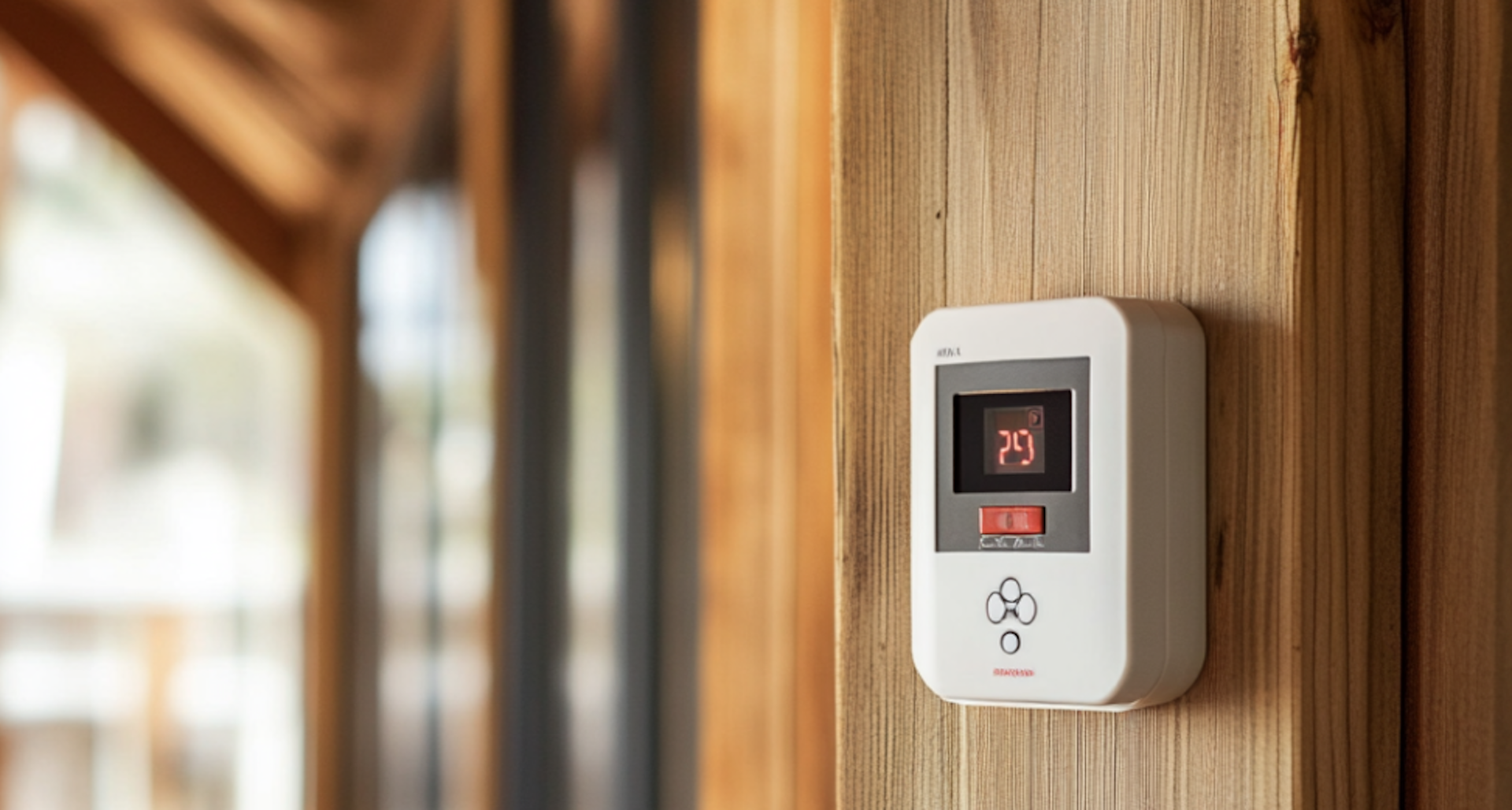
Do I Need a Radon Inspection On a New Home in NEPA?
You should absolutely get a radon inspection when buying or selling a home, as Northeast Pennsylvania is home to some of the highest radon concentrations in the nation.
After smoking, radon is the second leading cause of lung cancer in the United States.
Radon is an invisible, odorless, radioactive gas that naturally occurs in soil and can seep into properties through cracks in the foundation, posing severe long-term health risks if left unaddressed.
According to the Pennsylvania Department of Environmental Protection, 40% of homes in Pennsylvania have radon levels above the EPA-recommended level of 4.0 pCi/L. According to one chart, all counties in Northeast Pennsylvania sit in the highest-potential radon exposure zone.
Radon testing is not included in traditional property evaluations and requires a specialized professional test, costing around $420 on average.
While DIY radon tests are available online, radon levels fluctuate throughout the home, often giving inaccurate readings. Professional tests include longer-term monitoring to provide an accurate assessment of radon levels in your home.
In this article, we will break down how professional radon testing works, why radon is an important health concern in the commonwealth, and why to avoid DIY kits.
Why Is Radon Exposure Dangerous?
Radon is a silent gas found in all soil and rock. The end product of radioactive decay, radon can destroy lung tissue when inhaled in large quantities.
Radon gas itself is chemically inert, meaning it does not readily react with other elements. However, it is highly unstable and radioactive.
As radon decays in the indoor air, it breaks down into solid radioactive particles known as radon progeny or “radon daughters” (including polonium-218 and polonium-214).
These microscopic heavy metal particles attach themselves to ambient dust, smoke, and moisture droplets, which are easily inhaled deep into the respiratory tract. Once trapped in the lungs, these particles continue to decay rapidly, releasing a specific type of ionizing radiation known as alpha particles.
Symptoms of radon often don’t manifest until lung cancer has progressed to later stages, making early testing essential for mitigating long-term effects.
Due to its unstable nature, radon can differ in quantity among homes on the same street block or neighborhood.
How Common Is Radon in Northeast Pennsylvania?
Pennsylvania is widely recognized by environmental agencies as one of the most severe radon hot spots in the United States. According to the Pennsylvania Department of Environmental Protection (DEP), roughly 40% of homes tested across the Commonwealth have radon concentrations exceeding the EPA’s action level of 4.0 pCi/L.
The vast majority of NEPA counties are classified by the EPA as Zone 1, indicating the highest statistical potential for severe, elevated indoor radon levels.
| County | EPA Risk Zone | Average Tested Indoor Radon Level | Regional Risk Context |
| Wyoming County | Zone 1 (Highest Risk) | 20.0 pCi/L | 5 times the EPA action limit; tied for the highest county average in PA. |
| Susquehanna County | Zone 1 (Highest Risk) | 16.0 pCi/L | 4 times the EPA action limit; heavy concentrations across rural and residential areas. |
| Lackawanna County | Zone 1 (Highest Risk) | 12.0 pCi/L | 3 times the EPA action limit; extreme risk throughout Scranton and surrounding valley municipalities. |
| Monroe County | Zone 1 (Highest Risk) | 8.5 pCi/L | More than double the safe threshold; highly prevalent in the Poconos region. |
| Luzerne County | Zone 1 (Highest Risk) | 6.8 pCi/L | Significantly elevated above safe levels; highly volatile footprint across Wilkes-Barre and Hazleton. |
| Wayne County | Zone 2 (Moderate Risk) | 6.0 pCi/L | Still exceeds the EPA action level despite a lower macro-zone classification. |
According to the PA Radon Hub, testing in Easton reveals radon levels averaging around 8.52 pCi/L, and in Bethlehem, 6.44 pCi/L.
The extreme prevalence of radon gas in Northeast Pennsylvania is entirely driven by the region’s unique subsurface geology. The bedrock throughout the region contains vast formations of granite, dark shale, and uranium-bearing crystalline structures.
As the naturally occurring uranium in this rock decays over millions of years, it breaks down into radium, which further degrades into radon gas.
Since radon is a gas, it migrates upward through porous soil, easily entering residential properties through foundation cracks, sump pumps, and construction joints.
How Does Radon Testing Work?
Radon testing determines the level of radon gas in your home by the amount of picocuries per liter (pCi/L). According to EPA standards, anything above 4 pCi/L is considered dangerous.
Radon testing can be administered either by a professional certified by the National Radon Proficiency Program (NRPP) and the National Radon Safety Board (NRSB) or by an at-home kit provided by your state agency.
There are generally two types of radon tests that can be administered for short-term or long-term readings:
- Passive Testing: A charcoal canister is sent to a lab to determine the amount of radon exposure.
- Active Testing: An electronic device collects radon readings over a long period of time (90 days or more) to determine the amount of exposure.
If unsafe levels of radon are found in the home, an active test will be employed for further observation.
Is Radon Testing Included in My Home Inspection?
A standard home inspection does not include radon testing.
In Pennsylvania, for example, individuals administering radon tests for a real estate transaction must be specifically certified by the Department of Environmental Protection (DEP).
A standard home inspection license does not legally authorize an inspector to conduct official radon testing or interpret the results for a real estate contingency.
Be sure to look for proper credentials when hiring a radon inspector in Northeast Pennsylvania.
Should I Trust DIY Radon Testing Kits?
The single biggest flaw of a DIY radon test kit is its reliance on the person setting it up.
To get an accurate reading, strict “closed-house conditions” must be maintained for 12 hours before the test begins and throughout the testing period (usually 48 hours to a week). This means keeping all windows closed and limiting the opening of exterior doors to brief, necessary entries and exits.
Certified radon inspectors do not use charcoal canisters or liquid scintillation vials found in hardware store retail kits. Instead, they utilize advanced, calibrated Continuous Radon Monitors (CRMs).
These specialized electronic devices offer distinct advantages that a DIY kit simply cannot replicate:
- Hourly Data Tracking: Rather than providing a single, ambiguous average at the end of the week, a CRM records radon levels, temperature, relative humidity, and barometric pressure every single hour. This detailed data mapping allows professionals to spot unusual spikes or anomalies.
- Anti-Tamper Technology: Professional CRMs are equipped with internal motion sensors and data loggers. If someone moves the device, opens a window (causing a sudden drop in temperature or a spike in barometric pressure), or tries to interfere with the environment, the report will flag the exact hour and nature of the disruption. This legally protects the integrity of the test results for both buyers and lenders.
- Rapid, Certified Results: Real estate contracts have tight inspection windows, often requiring all testing to be completed within 10 to 14 days of signing. With a DIY kit, you have to mail the device to a third-party laboratory and wait days for processing. A professional inspector can download the CRM data immediately upon concluding the 48-hour test, delivering a certified, comprehensive report on the spot.
Ultimately, while a DIY kit might save a few dollars upfront, the financial and physical risks of a false negative are far too high. Investing in a professional radon inspection ensures that your data is legally admissible, completely accurate, and safe from human error or interference.
FAQs
What is radon?
Radon is a naturally occurring, radioactive gas that is produced by the breakdown of uranium in soil, rock, and water. It is invisible, odorless, and tasteless, making it undetectable without specialized testing. Radon can enter homes through cracks and gaps in the foundation and accumulate to dangerous levels.
Why is radon dangerous?
Radon is the second leading cause of lung cancer in the United States, responsible for approximately 21,000 lung cancer deaths annually. When inhaled, radon gas releases radioactive particles that can damage lung tissue over time, increasing the risk of lung cancer. The risk is especially high for smokers exposed to elevated radon levels.
How does radon enter my home?
Radon enters homes through cracks and openings in the foundation, walls, floors, and around pipes. It can also be released from well water. Because it comes from the ground, radon is often found in higher concentrations in basements or lower levels of a home, but it can be present at any level.
How can I tell if my home has high radon levels?
Radon is completely invisible, odorless, and tasteless, meaning there are absolutely no physical warning signs. The only definitive way to know if your home has high radon levels is to perform a dedicated radon test using either a professional continuous radon monitor or a certified testing kit.
What is a “safe” level of radon?
Biologically speaking, there is no entirely safe level of radon exposure, as any amount of radiation carries a minor risk of cellular mutation. However, the EPA has established an action level of 4.0 pCi/L (picocuries per liter of air).
If a home tests at or above 4.0 pCi/L, the EPA strongly recommends installing a radon mitigation system. Even if your results fall between 2.0 pCi/L and 4.0 pCi/L, you should still consider mitigation to lower the risk further.
If a home has high radon, can it be fixed?
Yes, absolutely. High radon levels are a very common issue, and they can be reliably fixed by installing a radon mitigation system.
The most common method is a sub-slab depressurization system, which uses a dedicated vent pipe and an inline fan to draw radon gas out from beneath your foundation and safely vent it to the air above your roofline, preventing it from entering your living spaces.
Who pays for radon mitigation during a home sale?
In a typical real estate transaction, the cost of installing a radon mitigation system is entirely negotiable between the buyer and the seller. However, if a professional test reveals levels at or above 4.0 pCi/L, it is customary for the buyer to request that the seller cover the costs of remediation before closing.
A seller will usually either hire a certified mitigation contractor to install the system prior to the final walkthrough or provide a financial credit to the buyer at closing to cover the expense.

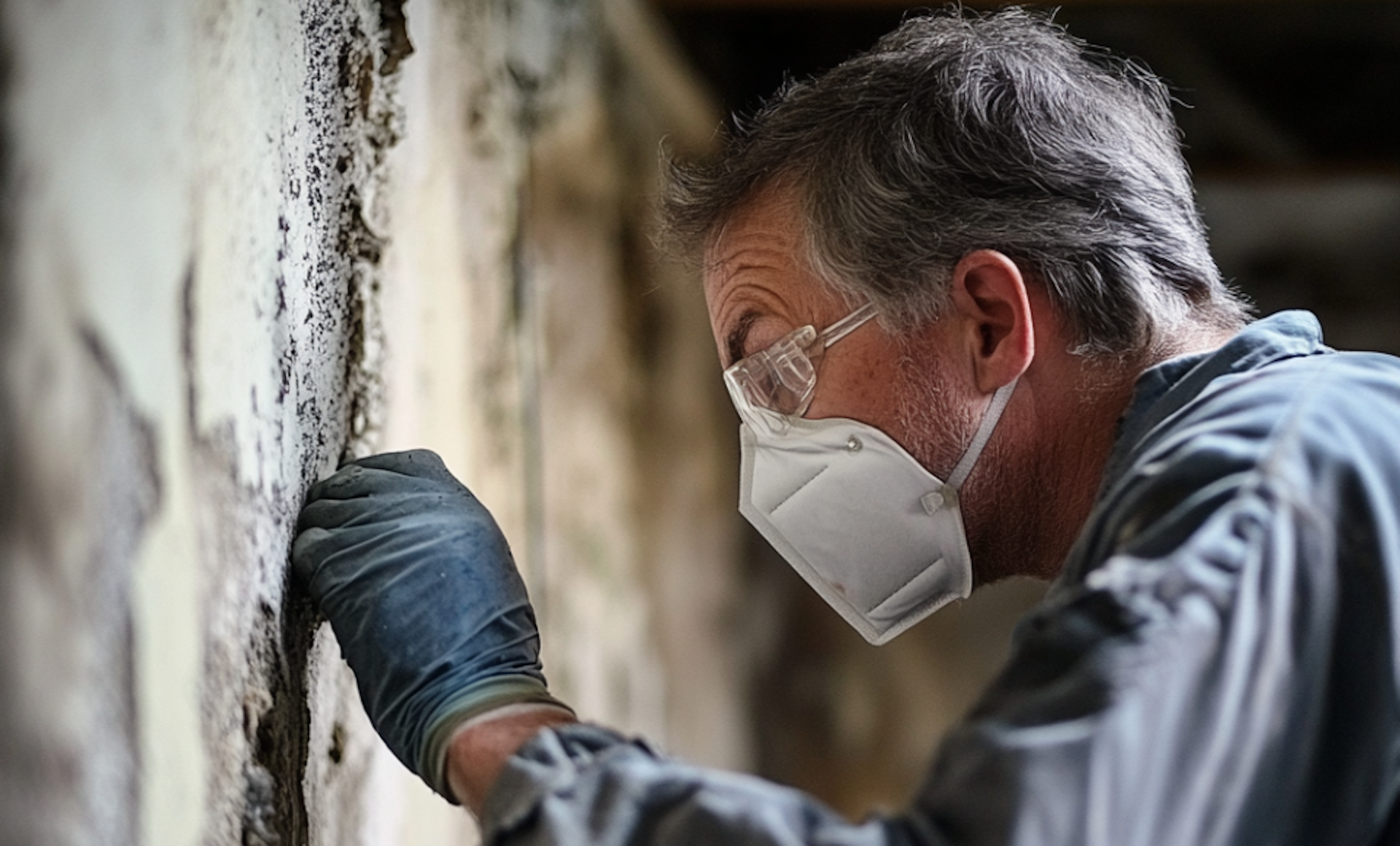
7 Reasons Home Buyers Should Get a Mold Inspection in NEPA
A mold inspection is necessary when buying a home in Northeast Pennsylvania because traditional home inspections do not cover comprehensive mold evaluations.
While standard home inspectors check for visible structural issues, they are not equipped to detect hidden fungal growth, toxic spores, or dormant moisture pockets trapped behind walls.
Given that the National Institute for Occupational Safety and Health (NIOSH) estimates that mold is present in up to 47% of U.S. residential homes, investing in a specialized mold assessment is essential to protecting your health and avoiding thousands of dollars in unexpected remediation costs.
While you may not think of mold exposure too much in the cold climate of Northeast PA, the high humidity of summer, combined with the poor ventilation that many older homes, unfortunately, provide, can make any home the perfect breeding ground for mold.
Discover seven essential reasons why a dedicated mold inspection is a must for every homebuyer. You will learn the critical differences between mold inspection and testing, along with actionable strategies for using these findings to negotiate a better deal before closing.
What Is a Mold Inspection?
A mold inspection is a thorough examination of a property designed to detect three important things:
- The presence and extent of mold exposure in the home.
- The species of mold and its threat level to human health.
- Potential sources of moisture or water damage that is accelerating the proliferation of mold growth.
During an inspection, our team of trained technicians will look at common areas where mold tends to be present, such as:
- Attics
- Basements
- Bathrooms
- HVAC Systems
What most of these areas have in common is close proximity to moisture and, typically, poor ventilation.
Once we uncover mold in your home, it will be sent out for testing to determine its severity.
Mold Inspection vs. Testing
A mold inspection identifies the physical presence and the source of moisture that causes mold, while mold testing determines the specific type and concentration of mold spores in the air or on a surface.
A professional mold inspection is a visual and physical assessment of a property to locate hidden dampness, water damage, and visible fungal growth in high-risk areas like attics, basements, and crawlspaces.
Conversely, mold testing involves collecting physical samples (such as air cassettes, tape lifts, or swab samples) and sending them to a laboratory to assess whether mold levels are abnormally high or dangerous.
| Mold Inspection | Mold Testing | |
| Primary Goal | Find where the mold is growing and what is causing it. | Identify the specific mold species and spore concentration levels. |
| Method | Visual assessment, moisture meters, and thermal imaging. | Air sampling, surface swabs, and laboratory analysis. |
| When Needed | Before buying a home, after a leak, or if you smell a musty odor. | To prove a problem exists for legal/insurance reasons, or post-remediation. |
| Outcome | A roadmap for fixing the underlying moisture issue. | A laboratory report detailing the exact fungal strains present. |
Are Mold Inspections Included in Home Inspections?
No, mold inspections are generally not included in a standard home inspection.
A typical home inspection is a non-invasive, visual evaluation of a property’s overall structure and major systems, such as the roof, plumbing, electrical, and HVAC.
While a standard home inspector will note visible mold or apparent water damage if they encounter it, they are not qualified, equipped, or contractually required to look for hidden mold, perform specialized moisture testing, or collect air and surface samples.
Is a Mold Inspection Necessary in NEPA?
A mold inspection is highly necessary in Northeast Pennsylvania (NEPA) due to the region’s humid continental climate, aging housing stock, and frequent seasonal flooding.
While mold is a risk anywhere, NEPA’s unique environmental and architectural factors create a perfect breeding ground for indoor fungal growth.
- Humid Summers and Heavy Snow: NEPA experiences intense seasonal shifts. Muggy summer months keep indoor humidity elevated, while winter snowmelt can overload gutters and cause water to seep into attics or ice-damaged roof eaves.
- Aging Infrastructure: Many communities in NEPA feature homes built over half a century ago. These older properties often have outdated stone foundations, aging roofs, and degraded basement waterproofing that easily lets in moisture.
- Coal Region Terrain: Local landscape features, such as high water tables and homes built directly into hillsides, often create hydrostatic pressure. This forces groundwater straight through porous concrete and block foundations into basements and crawlspaces.
- History of Flooding: Properties situated near the Susquehanna River lie in a floodplain, which can leave dormant mold spores behind walls if previous remediation wasn’t handled meticulously.
Given these localized risks, relying on a standard home inspection isn’t enough to guarantee a dry environment. Investing in a specialized mold inspection in NEPA is the best way to uncover hidden moisture problems, safeguard your respiratory health, and prevent costly structural remediation down the road.
7 Reasons Every Home Buyer Should Get a Mold Inspection
Every home buyer should get a specialized mold inspection to uncover hidden biological hazards, protect their health, and avoid unexpected, costly remediation bills after closing.
While buying a house is an exciting milestone, failing to inspect for mold can trap you in a home with structural damage and poor air quality. Relying solely on a general property assessment leaves a massive blind spot in your due diligence.
Here are the seven critical reasons why a dedicated mold inspection is a non-negotiable step for home buyers:
1. Past Water Damage May Be Deliberately (or Accidentally) Masked
When a house is put on the market—especially a recently renovated or flipped home—sellers can easily hide severe, active mold infestations behind a fresh coat of paint.
Sellers are legally required to disclose known defects, but they may genuinely be unaware of a slow leak inside a wall cavity, or they may have simply painted over a water stain without properly treating the underlying fungal growth.
A specialized mold inspection uses advanced diagnostic tools to look past fresh cosmetic cover-ups, ensuring you don’t inherit a masked environmental hazard that surfaces months after closing.
2. Protects Your Health
Indoor mold exposure is a major health hazard that significantly compromises indoor air quality. Inhaling or touching mold spores can trigger a variety of health issues, including:
- Chronic allergy-like symptoms (sneezing, coughing, watery eyes)
- Severe asthma attacks
- Persistent headaches and fatigue
- Unexplained skin rashes
For children, the elderly, or individuals with weakened immune systems, long-term exposure can cause debilitating respiratory issues.
A professional inspection can identify dangerous, toxic strains, such as Stachybotrys chartarum (commonly known as toxic black mold), before you move your family inside.
A mold inspection and testing can identify toxic species of mold, such as Stachybotrys (also known as black mold, to determine if remediation is required.
3. Uncovers Potential Water Damage
Mold is a major red flag for potential water damage in your home.
Mold requires moisture to proliferate, so the presence of mold may indicate a possible leak or poor ventilation that prevents excess humidity from leaving the home.
4. Mold Can Weaken Structural Integrity
Water damage can warp wooden structures and cause cracks in concrete, weakening the structural integrity of your home. But did you know that mold can also damage surfaces and degrade their integrity?
Mold feeds on organic materials like cellulose, so significant mold exposure behind drywall or floorboards can weaken these structures over time.
5. Mold Cleanup Can Be Expensive
According to Architectural Digest, homeowners can expect to pay around $2,230 for mold remediation. When factoring in other closing costs, furnishing your home, and possibly paying for other repairs, this is an expense that most home buyers simply can’t afford.
6. Buyers Can Negotiate a Better Deal
Discovering mold before you sign the final paperwork gives you significant leverage at the negotiating table.
Armed with an official mold inspection report, you can request that the current seller cover the full cost of professional remediation before closing, or ask for a price reduction so you can manage the cleanup yourself with your preferred contractor.
Performing a mold inspection, along with other important inspections, such as radon or water quality, can help buyers avoid expensive repairs and protect their investment.
7. Provides Helpful Advice for Future Mold Prevention
Our team of trained inspectors provides our clients with comprehensive advice on remediation and prevention so that they can avoid mold growth in their new homes.
Performing a separate mold inspection may not be something you budgeted for, but it can help you save money, protect your investment, and preserve your health.
FAQs
What does a mold inspection involve?
A mold inspection involves a visual assessment of the property, moisture readings, and sometimes air or surface sampling to detect the presence of mold spores. Inspectors will check common areas where mold grows, such as basements, attics, bathrooms, and HVAC systems.
How much does a mold inspection cost?
The cost of a mold inspection typically ranges from $300 to $1,000, depending on the size of the home and the extent of the inspection. While this may seem like an added expense, it is minimal compared to the potential costs of mold remediation.
Can I perform a mold inspection myself?
While you can check for visible signs of mold and moisture, a professional mold inspection is recommended. Professionals have the tools and expertise to detect hidden mold and assess potential risks that you may not notice.
How long does a mold inspection take?
A professional mold inspection typically takes between 1 and 3 hours to complete. The exact duration depends heavily on the property’s square footage, the accessibility of areas such as crawlspaces and attics, and whether the inspector needs to collect physical air or surface samples.
Once the physical assessment is complete, laboratory processing for any collected samples usually takes an additional 2 to 5 business days before a final, detailed report can be delivered.
Can you sell a house with mold in Pennsylvania?
Yes, you can legally sell a house with mold in Pennsylvania, provided that the mold is fully and accurately disclosed to potential buyers.
According to Pennsylvania’s Real Estate Seller Disclosure Law, sellers must disclose any known environmental hazards, material defects, or past water infiltration issues on the standard seller disclosure form. Failing to disclose known mold problems can lead to severe legal liabilities and lawsuits for fraud or misrepresentation after closing.
Does a musty smell always mean there is mold?
Yes, a persistent musty smell almost always indicates the active growth of mold or mildew fueled by hidden moisture. The characteristic “musty” odor is caused by Microbial Volatile Organic Compounds (mVOCs), gases released by fungi as they grow and reproduce.
Even if there is no visible staining on your walls or ceilings, a strong musty scent is a primary warning sign that mold is actively thriving out of sight within wall cavities, under floors, or inside HVAC ductwork.
Is mold covered by home insurance?
Home insurance only covers mold remediation if the fungal growth was caused by a sudden and accidental peril that is already covered by your policy. For example, if a water pipe suddenly bursts and causes a mold outbreak before it can be dried, your homeowner’s insurance will likely cover the cleanup costs.
However, insurance policies strictly exclude mold coverage if the growth is the result of long-term neglect, poor ventilation, lack of maintenance, or regional surface flooding (which requires separate flood insurance).
[/vc_column_text]