
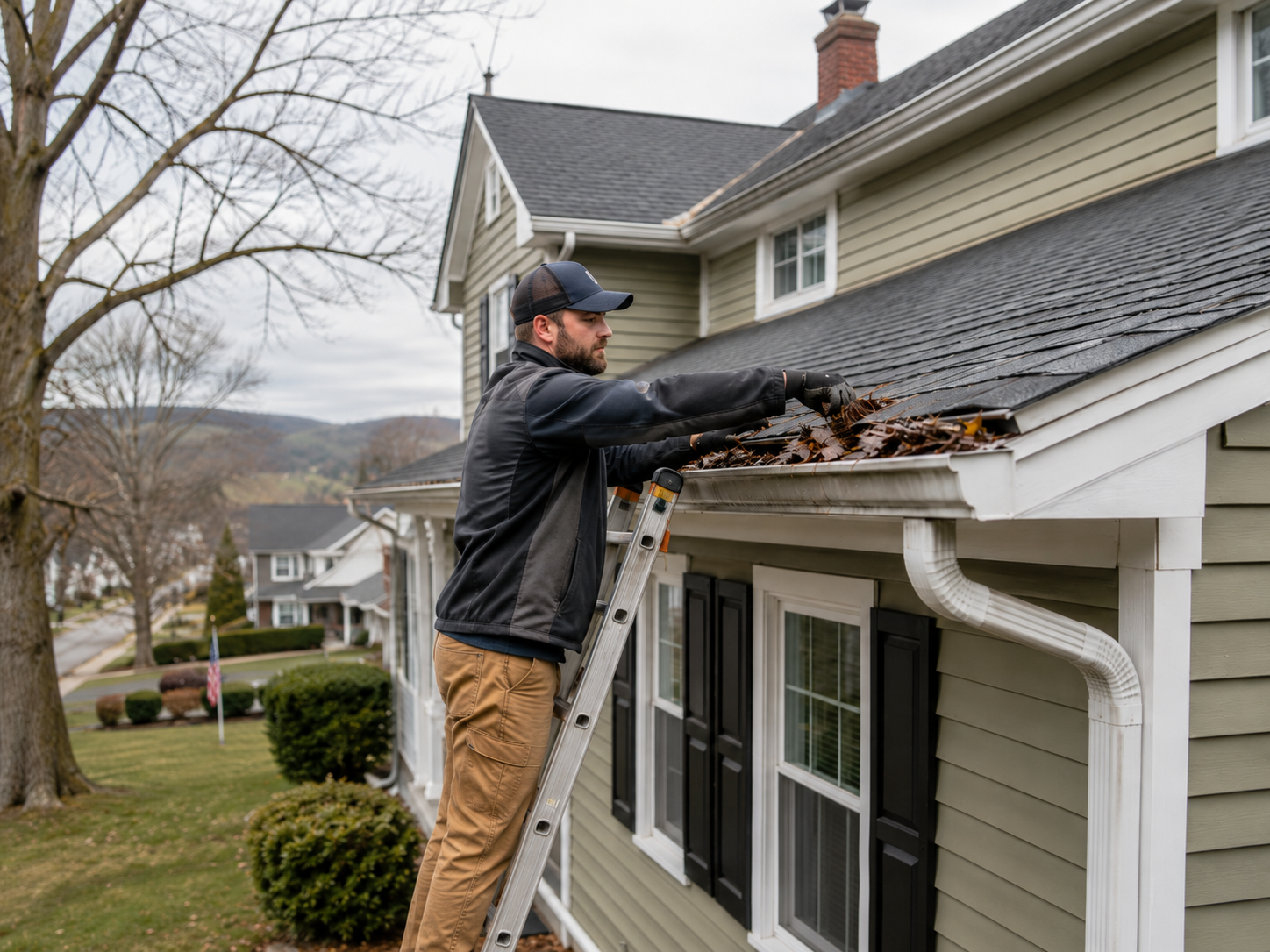
Gutter Maintenance for NEPA Homes: Prevent Water Damage
Gutters are a home’s first line of defense against water damage. When they work, rain and snowmelt flow away from the roof and foundation. When they clog, water backs up and finds its way into the places that cost the most to repair. Gutter and drainage problems are also among the most common findings in a home inspection.
In Northeastern Pennsylvania, that risk runs higher than in milder climates. Dense tree cover drops heavy leaf litter every fall, snow loads the roofline, and freeze-thaw swings turn standing water in a gutter into ice within hours.
This guide explains how clogged gutters cause bigger problems, gives you a simple seasonal checklist, and shows what an inspector looks for. Updated August 2026.
How do clogged gutters lead to bigger problems?
A clogged gutter does not stay a small problem. Water that cannot drain has to go somewhere, and it moves toward the parts of the house you least want it to reach.
- Ice dams and ice weight: Ice dams form when attic heat melts rooftop snow that refreezes at the cold eaves, forcing water back under the shingles. InterNACHI notes that gutters do not cause ice dams, but they concentrate the ice in a vulnerable spot, where the weight can tear gutters and fascia away from the house.
- Fascia and soffit rot: Overflowing water runs down the boards behind the gutter. Over time that wood softens, rots, and pulls the gutter loose.
- Foundation and basement water: Water that spills over the edge lands next to the foundation. It saturates the soil, seeps into the basement, and can crack the foundation as the ground shifts.
Each of these starts with the same cause. A gutter that cannot carry water away turns a normal rainstorm into a slow leak somewhere in the house. For a deeper look at how winter drives the worst of it, see how ice dams form and the damage they cause.
What is a simple seasonal gutter checklist?
Gutter maintenance is easier when you tie it to the seasons. NEPA’s weather gives each season a specific job.
Spring
- Clear out seeds, buds, and debris that built up over winter.
- Check for damage from ice and snow load, such as sagging or pulled-away sections.
- Confirm downspouts drain freely after the thaw.
Summer
- Flush gutters with a hose to check the flow and find slow spots.
- Trim back branches that drop leaves and debris onto the roof.
- Look for rust, separated seams, or loose fasteners while the weather is dry.
Fall
- Clean gutters after the leaves drop, which is the most important cleaning of the year in NEPA.
- Consider gutter guards if heavy leaf fall clogs your gutters every year.
- Clear downspouts and extensions before the first freeze so meltwater has a path.
Doing these small checks on a schedule prevents the large repairs that come from neglect.
What do inspectors notice about gutters and drainage?
Gutters are a standard part of a home inspection. Under the InterNACHI Standards of Practice, the inspector inspects the gutters and downspouts along with the roof covering, and evaluates surface drainage and grading where they may affect the structure through moisture intrusion.
An inspector flags gutter and drainage problems because they point to water damage risk. Common findings include:
- Clogged, sagging, or separated gutters, or gutters sloped so water stands instead of draining.
- Downspouts that dump water right next to the foundation.
- Water stains on fascia, soffits, or the exterior wall.
- Grading that slopes toward the house instead of away from it.
An inspector documents these findings with photos but does not clean or repair the gutters. That is the buyer’s cue to price the fix or ask the seller to handle it before closing. Gutter and drainage issues often connect to the roof, so see our guide on common roof problems and how to spot them for how these overlap.
How do downspouts and grading keep water away from the foundation?
Clean gutters are only half the system. The water still has to travel away from the house, and that is the job of downspouts and grading. InterNACHI’s guidance on gutters and downspouts calls for splash blocks or downspout extensions so runoff does not pond next to the foundation.
Downspouts should carry water several feet away from the foundation, not drop it at the base of the wall. If your downspouts feed an underground drain, confirm the line is clear and pitched to daylight, because a buried drain that clogs or freezes sends water right back toward the foundation.
Grading matters just as much. The ground should slope away from the house so surface water drains outward. When soil settles and slopes back toward the foundation, even clean gutters cannot stop water from pooling against the wall. For a season-by-season routine that covers this and the rest of the house, see our home maintenance checklist.
When do gutter issues signal roof or structural concerns?
Sometimes a gutter problem is the visible edge of a larger one. The repairs behind these signs, a new fascia board, a re-flashed roof edge, or a waterproofed foundation, cost far more than a gutter cleaning. Knowing the difference tells you when to call a professional.
- Gutters pulling away from the roofline, which can mean the fascia behind them has rotted.
- Large icicles and heavy ice buildup at the eaves every winter, which point to ice dams and attic heat loss.
- Water stains inside the home below the roofline, which suggest water is already getting in.
- Persistent basement moisture after rain, which ties drainage to the foundation.
If you see these, the gutters are telling you to look at the roof and structure. Winter is when they show up most, so review how snow and ice damage a NEPA roof before the season starts. If you suspect water has already gotten in, learn how to spot signs of previous water damage in your NEPA home.
Buying or selling a home in Northeastern Pennsylvania? A Mountain to Valley home inspection covers the roof, gutters, drainage, and grading so you know where the water goes. Schedule your inspection by calling 570-899-3255.
FAQs
How often should I clean my gutters in NEPA?
At least twice a year, in spring and fall. The fall cleaning after the leaves drop is the most important one in Northeastern Pennsylvania.
Can clogged gutters really cause foundation damage?
Yes. When gutters overflow, water pools next to the foundation, saturates the soil, and can seep into the basement or crack the foundation over time.
Are gutters included in a home inspection?
Yes. Under the InterNACHI Standards of Practice, the inspector inspects the gutters and downspouts as part of the roof, along with grading and surface drainage that may affect the structure.
Do gutter guards eliminate the need to clean gutters?
No. Guards reduce how often you clean, but they do not remove the need entirely. You still need to check the flow and clear fine debris, especially in heavy leaf areas.
Do clogged gutters cause ice dams?
Not directly. Ice dams form when attic heat melts rooftop snow that refreezes at the cold eaves. Clogged gutters make the situation worse by concentrating ice at the roof edge, where the weight can damage gutters and fascia.
