
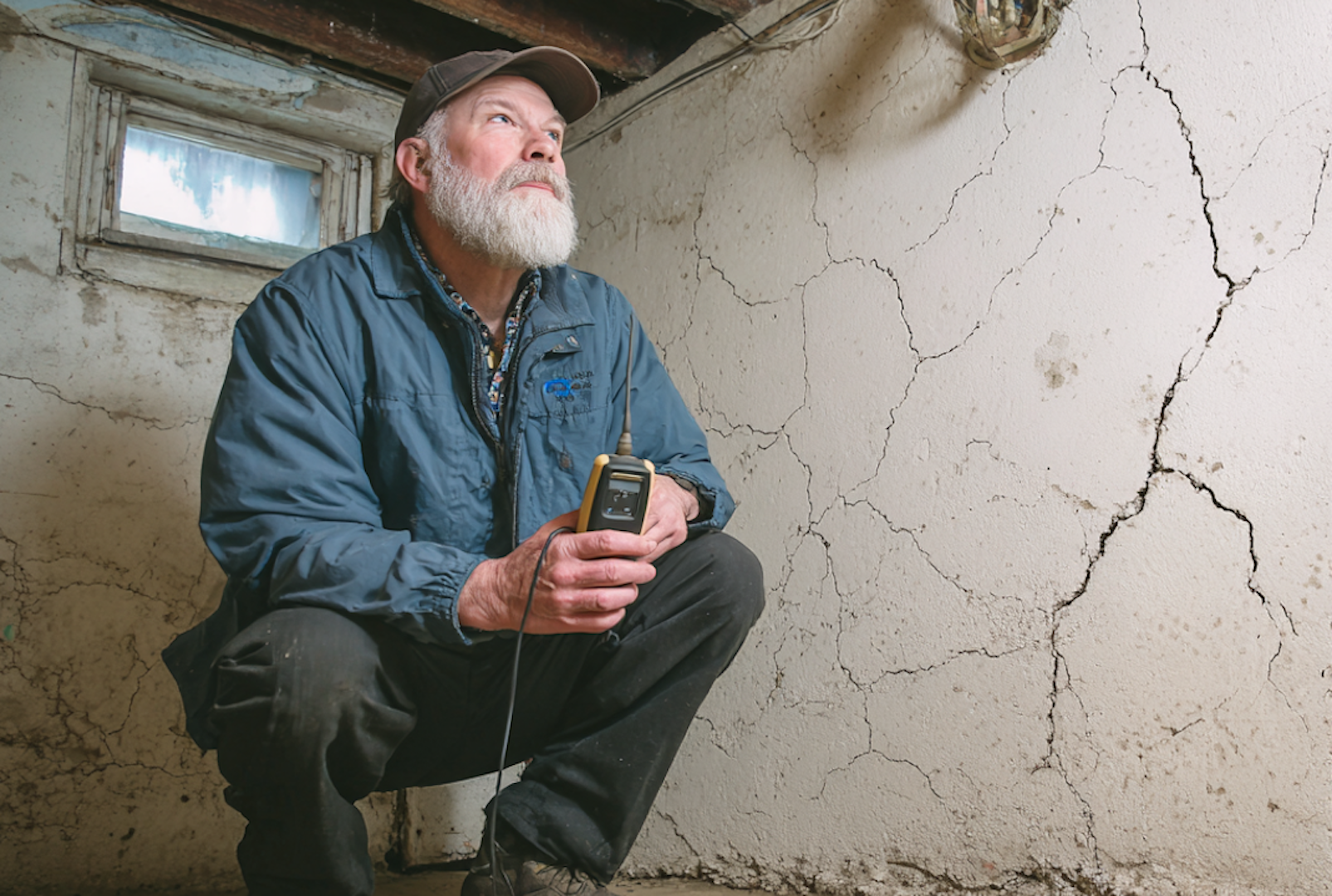
What Homes in NEPA Are Most At Risk for Radon?
Northeast Pennsylvania has one of the highest radon levels in the nation due to its unique geology and mineral history.
Approximately 40% of homes across the commonwealth have radon levels above the EPA-recommended level (4 pCi/L), with many older homes with poor ventilation or located on low elevations being most at risk.
Radon is a radioactive gas that forms naturally from the breakdown of uranium in soil and rock. The long-term effects of radon exposure include the risk of lung cancer, the second leading cause in the nation.
Radon testing is essential to protecting your family from harmful radon exposure and understanding your risks, as radon levels can fluctuate over time.
The region’s geology, combined with common home construction styles, makes many properties highly vulnerable to radon buildup. This guide explains which homes face the highest risk, why NEPA radon levels run unusually high, and what steps homeowners can take to stay safe.
Why Are Radon Levels High in Northeast Pennsylvania?
Radon is linked to Pennsylvania’s geology. When uranium-rich rock breaks down, radon gas escapes upward through soil and into buildings. NEPA has several environmental factors that make radon more common and more dangerous than in other parts of the country:
1. NEPA’s Geology Is Naturally Uranium-Rich
Counties like Luzerne, Lackawanna, Schuylkill, Wyoming, Carbon, and Monroe sit on rock formations with higher concentrations of uranium, such as the Mauch Chunk formation near Wilkes-Barre and extending down into Jim Thorpe. As uranium decays, radon levels rise, especially in lower-elevation parts of the home.
2. Valley Geography Creates Trapped Gas Zones
The Wyoming Valley, Lehigh Gorge, and surrounding Appalachian ridges create pockets where radon can accumulate underground before entering homes.
3. Historic Mining Disturbed the Soil
Decades of anthracite coal mining fractured rock layers and changed how soil gases move. Old mine shafts and voids can act as pathways that funnel radon directly toward foundations.
4. Pennsylvania Winters Increase Exposure
Cold weather keeps homes tightly sealed, preventing radon from escaping. Heating systems also create a “stack effect,” which pulls soil gas upward into the home.
These environmental factors combine to create a perfect storm for radon accumulation in NEPA. The only way to know your home’s level is to test it.
Which NEPA Homes Are Most at Risk for Radon?
While any home can have high radon, certain property types are more vulnerable across Northeastern Pennsylvania.
1. Older Homes Built Before Modern Ventilation Standards
Older homes across Scranton, Wilkes-Barre, Hazleton, Kingston, and Pittston often lack the tight building envelopes and controlled ventilation systems found in newer construction. For example, many of these homes contain outdated building practices that may make them susceptible to radon, including:
- Dirt-floor crawl spaces
- Fieldstone foundations
- Poorly sealed sump pits or floor drains
- Natural settling and foundation cracks
These structural gaps allow radon to move freely from the soil into the living space. Even minor foundation shifts over decades can dramatically increase radon entry.
2. Homes With Basements or Crawl Spaces
Radon moves upward from the soil and slips into your home through cracks in concrete, gaps around pipes, sump pits, expansion joints, and openings in block walls.
Crawl space homes are just as vulnerable because exposed soil continually releases radon, allowing the gas to rise into the living space above.
Virtually any home with direct soil contact offers more pathways for radon to enter, making basements and crawl spaces some of the highest-risk structures in NEPA.
3. Homes Built on Coal Fields or Near Abandoned Mines
Much of Luzerne and Lackawanna County sits on former anthracite mining land. These underground voids act like natural air channels.
Neighborhoods at higher risk from radon from old mining shafts include:
- Ashley
- Hanover Township
- Nanticoke
- Sugar Notch
- Parsons
- Miners Mills
- Throop and Olyphant
4. New Construction in NEPA
Surprisingly, new homes often have higher radon levels than older ones. Many NEPA homeowners assume a new build is safe, yet the opposite is often true.
Newer homes are built tightly for energy efficiency. This increases negative pressure indoors, which literally pulls radon out of the soil more aggressively.
5. Homes Built in Valleys, Low-Lying Areas, or High-Radon Zones
Homes located in low elevation pockets—like those throughout the Wyoming Valley—are more prone to radon accumulation because soil gases naturally settle and migrate downward.
NEPA ZIP codes with consistently elevated radon results include:
- 18702, 18704, 18705 (Wilkes-Barre area)
- 18508, 18509, 18510 (Scranton area)
- 18201, 18202 (Hazleton)
- 18301–18360 (Poconos)
Even if homes are miles apart, radon levels can dramatically vary from house to house.
How Radon Enters NEPA Homes
Understanding radon entry points helps reveal why a radon inspection is essential. Radon typically infiltrates through:
- Foundation cracks
- Hollow block walls
- Sump pits
- Floor-wall joints
- Gaps around plumbing
- Crawl space vents
- Basement drains
Radon takes the path of least resistance, which is why your basement acts as a vacuum that pulls it inside.
Why Radon Testing Is Essential in NEPA
Pennsylvania law does not require radon testing in homes, but the Department of Environmental Protection strongly recommends it, especially in NEPA.
Radon is the second leading cause of lung cancer in the United States, responsible for more than 21,000 deaths each year, and NEPA consistently records some of the highest radon levels in the country. Many homes exceed the EPA’s 4.0 pCi/L action level, and it’s not uncommon for properties in the region to measure 20, 50, or even 100+ pCi/L.
Radon levels also fluctuate over time, changing with the seasons, home renovations, HVAC adjustments, and foundation settling. The only way to know your home’s current risk is through testing.
Radon testing is simple and affordable, though we do recommend hiring a professional for a short-term or long-term test. DIY kits may not accurately capture the true amount of radon that your family is exposed to.
Regular testing ensures you catch elevated levels early and protects your family’s long-term health.
Tips to Protect Your NEPA Home From Radon
While long-term radon exposure poses serious health risks, homeowners have effective ways to lower indoor levels.
The most reliable solution is a radon mitigation system, commonly known as a sub-slab depressurization system, which pulls radon gas from beneath the foundation and vents it safely outside. When professionally installed, these systems can reduce radon levels by as much as 99%, even in high-risk areas.
Additional improvements can support or enhance mitigation efforts. Sealing major cracks in the foundation reduces unnecessary entry points, and installing airtight covers on sump pits helps block soil gases from entering the basement.
Increasing ventilation—especially in basements and lower levels—can dilute radon concentrations, while encapsulating crawl spaces creates a physical barrier between living spaces and exposed soil, one of the most common radon pathways in older NEPA homes.
Together, these strategies create a comprehensive line of defense, allowing homeowners to bring radon levels down to safe, EPA-recommended thresholds.
FAQs
Are radon levels really higher in NEPA than other regions?
Yes. Northeast Pennsylvania consistently records some of the highest radon readings in the U.S. due to its geology and mining history.
Do only older homes have radon?
No. New homes—especially energy-efficient ones—can have even higher radon levels because they trap indoor air more tightly.
Is radon testing required when buying a home in Pennsylvania?
Not by state law, but many lenders and inspectors strongly recommend it.
Can radon vary between neighbors?
Absolutely. Two homes side by side can have dramatically different levels.
Is radon dangerous at low levels?
Any exposure carries risk, but the EPA recommends mitigation at 4.0 pCi/L or higher.


What Is an Environmental Phase 1 Assessment in PA? Do I Need One?
Buying commercial property in Pennsylvania can be a massive investment, loaded with risks and liabilities that may not appear on a traditional commercial inspection report.
Depending on the property’s previous use, contamination in the ground may be present from old fuel tanks, manufacturing waste, buried debris, or from neighboring properties. Many properties across Northeast Pennsylvania also sit on top of defunct coal mines, wetlands, and natural gas reserves that could be laden with additional red tape that could impact your business’s ability to get off the ground.
A Phase I Environmental Site Assessment (Phase I ESA) is a tool designed to identify potential environmental issues before you purchase or develop land, protecting you from liability and helping lenders evaluate risk. In a state with centuries of industrial activity and widespread legacy contamination, a Phase I ESA can save you from costly cleanup and liability that could stall your business venture.
This guide explains what a Phase I ESA is, why it matters in Pennsylvania, what it includes, and how to determine whether you need one for your next project.
What Is a Phase I Environmental Site Assessment?
A Phase I Environmental Site Assessment is a research-based investigation that evaluates whether contamination may be present on or around a property. It is performed according to the ASTM E1527-21 standard and is considered the national benchmark for environmental due diligence.
How a Phase I ESA Works
A qualified environmental professional researches property records, historical land use, governmental databases, and surrounding land activities, then performs an on-site inspection and interviews knowledgeable parties. The assessment identifies Recognized Environmental Conditions (RECs): indicators that contamination may exist.
Why It Matters
Phase I ESAs protect buyers under the CERCLA “innocent landowner” defense, help lenders minimize risk, and ensure developers understand liabilities before investing. Without a Phase I, you may unknowingly inherit the responsibility for costly remediation.
Why Phase I Assessments Are Important for Commercial Property Owners in Pennsylvania
Northeastern Pennsylvania has a uniquely complex environmental history shaped by more than a century of coal mining, heavy industry, and unregulated waste disposal.
Anthracite mining left behind abandoned mine lands, subsidence zones, coal waste piles, and acid mine drainage that continues to influence groundwater movement today. Many commercial corridors, from Scranton and Wilkes-Barre to Pittston, Hazleton, and the Wyoming Valley, were also built over old rail lines, fuel depots, machine shops, and manufacturing plants that operated long before environmental laws existed.
Even rural NEPA properties, including former farms across Bradford, Wayne, Susquehanna, and Luzerne counties, may contain residual pesticides, buried debris, or undocumented underground storage tanks.
These historic activities mean that contamination may exist even when a site looks clean at the surface. Pollution can migrate through soils and groundwater, move between properties, or remain buried beneath concrete slabs for decades. Because many hazards in NEPA are invisible, commercial buyers cannot rely on visual inspection alone.
A Phase I ESA is the only reliable way to identify environmental red flags early, protect yourself from liability, and avoid inheriting costly cleanup obligations after closing.
Do You Need a Phase I ESA in Pennsylvania?
A phase 1 site assessment is generally beneficial for any commercial property transaction. The following scenarios are most common when buyers or sellers request a Phase 1 assessment.
- Purchasing commercial, industrial, multifamily, or mixed-use property
- Developing land that disturbs soil or changes site use
- Applying for a commercial loan or refinancing
- Redeveloping brownfields or former industrial areas
- Purchasing agricultural land, especially if old tanks or pesticide storage are suspected
Lenders and investors rely on Phase I ESAs to quantify environmental risk. Without one, they may deny financing or require costly additional protections.
Even if you’re a cash buyer, skipping a Phase I means you accept full liability for any existing environmental issues, even those caused by previous owners.
What Is Included in a Phase 1 ESA
A Phase I ESA is structured into four major components. Each step serves a specific purpose and together forms a legally defensible risk assessment.
1. Records Review
The environmental professional searches decades of documentation to understand past and current land use.
Some common sources they will examine include:
- Historical aerial photographs (often from Penn Pilot and USGS archives)
- Sanborn fire insurance maps
- Pennsylvania DEP databases
- EPA databases (CERCLA, RCRA, Brownfields, etc.)
- Underground storage tank registries
- Local zoning, permits, and building records
This step often reveals risks not visible on-site, such as former gas stations, dry cleaners, industrial activity, waste disposal, or nearby spills. In PA, many of these records stretch back 100+ years and highlight long-forgotten hazards.
2. On-Site Inspection (Site Reconnaissance)
During the on-site inspection, the environmental assessor walks the property to look for anything that may indicate current or past contamination. This includes signs such as vent pipes or fill ports from old heating oil tanks, stained soils or stressed vegetation, waste storage areas, unusual floor drains or sumps, debris piles, or concerns on neighboring properties that could migrate onto the site.
Even subtle clues—like a capped metal pipe protruding from the ground or vegetation dying in one concentrated area—can signal deeper risks that may require further investigation in a Phase II assessment.
3. Interviews and Local Research
As part of the Phase I process, the environmental assessor speaks with people who know the property best, including current or former owners, facility managers, neighbors, fire officials, and local zoning or building departments.
These conversations help uncover details that may never appear in written records, including past fuel spills, undocumented underground tanks, old industrial uses, or renovations that altered the site.
This human insight is often critical because many environmental issues in older Pennsylvania properties were never formally recorded, yet still pose liability risks for today’s buyers.
4. Written Report and Environmental Findings
A final report will be written and delivered to the interested parties, including factual information related to:
- Recognized Environmental Conditions (RECs)
- Historical RECs
- Controlled RECs
- Environmental red flags
- Recommendations for Phase II sampling (if needed)
This report provides the legal framework for liability protection and is required by most lenders.
Common Environmental Issues Found in Pennsylvania Phase I ESAs
Due to the state’s industrial past, it’s not uncommon to find potential contaminants in residential and commercial areas. Some of the most common issues we tend to see include:
- Old heating oil tanks behind homes and commercial buildings
- Former manufacturing sites with solvent or metal contamination
- Railroad spurs and rights-of-way containing petroleum byproducts
- Dry cleaner contamination (PCE and TCE)
- Mine-related impacts, such as subsidence or contaminated groundwater
- Pesticide residues on former farmland
- Illicit dumping or buried debris
Each of these conditions can trigger a recommendation for Phase II sampling.
What Happens If the Phase I ESA Finds a Problem?
Phase I identifies potential contamination and risks, but does not confirm them.
If RECs or other issues are found, the next step is typically a Phase II ESA, which may involve:
- Soil sampling
- Groundwater sampling
- Vapor intrusion testing
- Tank tightness testing
- Geophysical surveys
If contamination is confirmed, the PA DEP’s Act 2 Land Recycling Program offers liability protections and cleanup pathways.
Benefits of Getting a Phase I ESA Before Purchasing Property
A Phase I Environmental Site Assessment offers several major advantages for commercial buyers in Pennsylvania:
- Protection from CERCLA/Superfund liability
- Cost savings during negotiation
- Greater confidence in redevelopment projects
- Lender and investor approval
- Long-term risk mitigation
- Clear documentation of environmental conditions
These benefits work together to reduce financial exposure and ensure you fully understand the property you’re purchasing.
Most importantly, a Phase I ESA prevents buyers from unknowingly inheriting historical contamination; a mistake that has cost businesses millions in unexpected cleanup, delays, and legal issues.
Completing a Phase I before closing gives you the confidence and legal protection needed to move forward with any commercial property acquisition in Pennsylvania.
FAQs
How long is a Phase I ESA valid in Pennsylvania?
Phase I ESAs are valid for 180 days, with some components valid for up to one year. After that, updates are required.
How much does a Phase I usually cost?
Most Phase I ESAs in Pennsylvania cost $1,600–$6,000, depending on size, history, and location.
Does a Phase I ESA include testing?
No. Testing is only conducted during Phase II if Phase I finds evidence suggesting contamination.
Can a residential buyer request a Phase I?
Yes, especially if the home is near industrial areas, rail lines, farmland, or suspected tank locations.
What is a REC (Recognized Environmental Condition)?
A present or likely presence of contamination that requires further evaluation.
How long does a Phase I take?
Most take 2–4 weeks, depending on record retrieval and site complexity.
Who is qualified to perform a Phase I?
Only an Environmental Professional (EP) meeting EPA/AASHTO standards can legally complete one.