
Radon is one of the most overlooked health risks in residential homes, yet it’s also one of the most dangerous. You can’t see it, smell it, or taste it, but prolonged exposure is the second leading cause of lung cancer in the United States.
An estimated 40% of homes across Pennsylvania have radon levels above the EPA’s recommended action guideline of 4 picocuries per liter (pCi/L).
Professional radon testing provides the most accurate analysis of radon exposure across different levels of the home, where radon tends to be most concentrated on lower levels.
However, DIY and store-bought radon kits are available, but their results can vary and yield inaccurate estimates.
This guide walks through how radon testing works, when DIY testing is sufficient, when professional testing makes more sense, and how to decide which approach fits your situation.
What Is Radon and Why Testing Matters
Radon is a naturally occurring radioactive gas that forms when uranium decays in soil and rock. It moves upward through the ground and can enter homes through cracks in foundations, sump pits, crawl spaces, floor drains, and construction joints.
Once inside, radon can accumulate to dangerous levels, especially in lower areas like basements and crawl spaces. Because radon exposure happens over time, homeowners often don’t realize there’s a problem until elevated levels are discovered through testing.
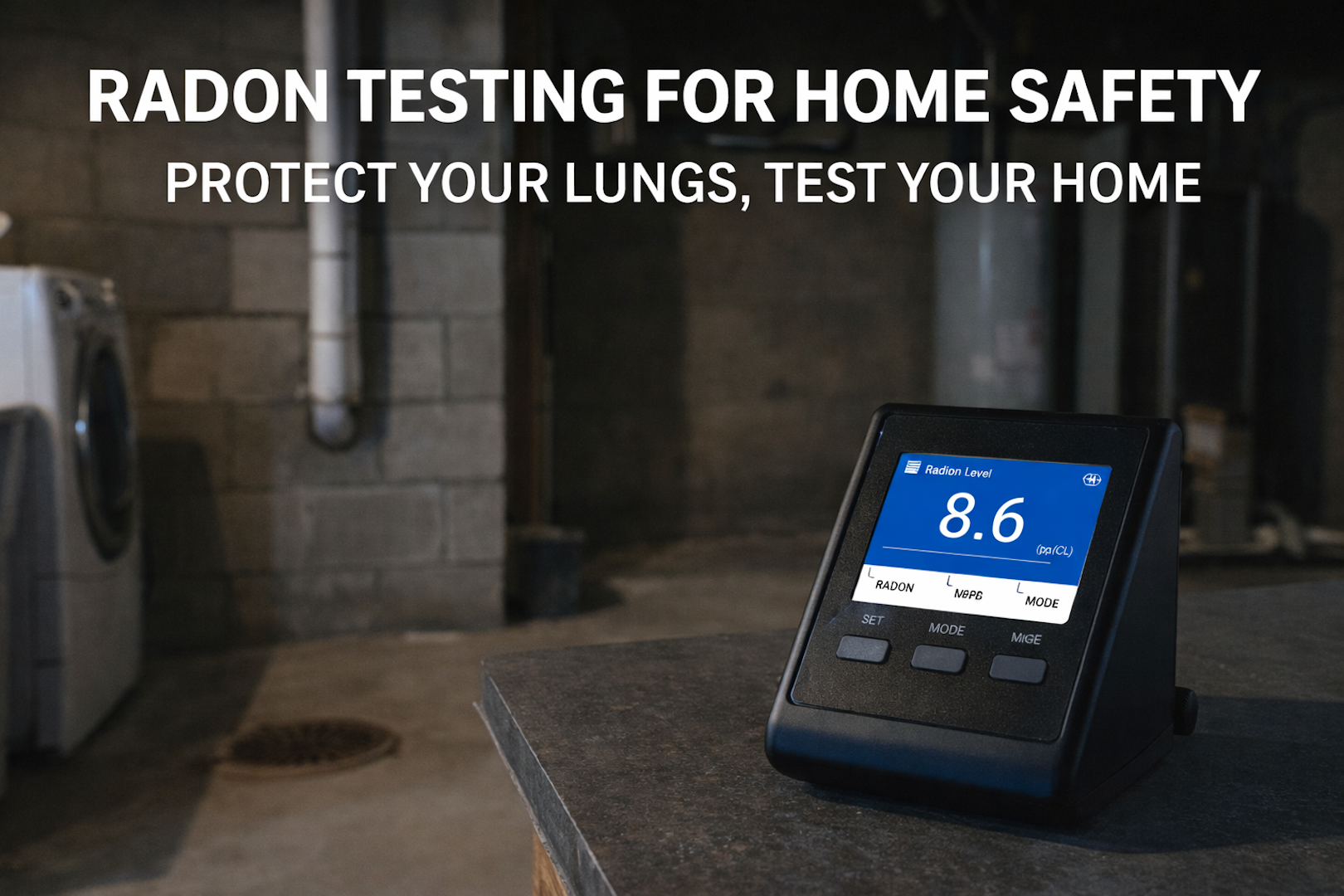
Testing is the only way to know if radon is present in your home at unsafe levels. The Environmental Protection Agency (EPA) recommends action if radon levels are 4.0 picocuries per liter (pCi/L) or higher, though even lower levels carry some risk.
How Common Is Radon in Northeast Pennsylvania?
Radon is very common in Northeast Pennsylvania due to regional geology. Areas with shale, granite, and uranium-rich rock formations naturally produce higher levels of radon gas. Combine that with older housing stock, basements, and fluctuating seasonal pressure changes, and many homes unknowingly trap radon indoors.
What makes radon particularly challenging is that elevated levels can vary dramatically from house to house—even on the same street. Two neighboring homes built at the same time can test very differently based on foundation type, soil composition, and ventilation patterns.
Because radon levels are so location-specific, regional averages don’t provide protection. Individual testing is the only reliable way to assess risk in your specific home.
How Radon Testing Works
Radon testing measures the concentration of radon gas in indoor air over a defined period of time. Tests fall into two broad categories:
- Short-term tests (2–7 days)
- Long-term tests (90 days to 12 months)
Short-term tests are commonly used for real estate transactions or initial screening. Long-term tests provide a more accurate picture of average exposure over time, accounting for seasonal changes.
Both DIY kits and professional services use these same testing principles, but the difference lies in how the test is deployed, monitored, and interpreted.
How Accurate Is DIY Radon Testing?
DIY radon testing can be accurate when done correctly, but results are highly sensitive to placement and testing conditions. Most DIY kits use charcoal canisters, alpha track detectors, or consumer-grade digital monitors. These devices absorb or detect radon over time and either display a reading or require lab analysis.
Accuracy depends on following instructions precisely. Tests must be placed in the lowest livable level of the home, away from drafts, windows, exterior walls, and high-humidity areas.
The challenge is that small mistakes can skew results. A test placed too close to a sump pit, HVAC vent, or exterior wall may over- or under-report levels.
DIY tests also can’t detect whether environmental conditions changed during testing, such as a window being opened or a pressure shift caused by weather.
DIY testing works best as a screening tool, but nothing more. It can tell you whether radon is likely present and whether further testing is needed.
DIY vs. Professional Radon Testing: Key Differences
The following table discusses the pros and cons of professional radon testing vs. DIY kits.
| Factor | DIY Testing | Professional Testing |
| Cost | Lower | Higher |
| Accuracy | Variable | High |
| Ease | Simple | Hands-off |
| Interpretation | Homeowner responsibility | Expert guidance |
| Real estate use | Often not accepted | Widely accepted |
| Monitoring | Limited | Continuous & verified |
Professional testing is always recommended when there is any suspicion of radon present on the property or a real estate transaction is made to guarantee accurate results.
When to Invest in Professional Radon Testing?
Professional testing is commonly recommended for many scenarios where proper evaluation and documentation are essential:
- Buying or selling a home
- Finishing a basement or changing HVAC systems
- DIY results are near or above 4.0 pCi/L
- Long-term health exposure is a concern
- Documentation is required for lenders or negotiations
Instead of leaving interpretation to the homeowner, professional testing provides clear next steps if mitigation is needed.
What to Do If Radon Levels Are High
If testing shows radon levels at or above 4.0 pCi/L, mitigation is recommended. Radon mitigation systems typically involve sub-slab depressurization, which redirects radon gas safely outside before it enters the home.
Even if levels are between 2.0 and 4.0 pCi/L, many homeowners choose mitigation as a preventative measure, especially in homes with finished basements or long-term occupancy.
Choosing the Right Testing Approach
DIY radon testing is a good starting point for homeowners who want basic awareness and are comfortable following instructions carefully, but it should never be relied on as a true diagnostic tool. Professional testing is the better option when accuracy, documentation, or expert interpretation matters, especially since radon levels are significantly elevated in Northeast PA.
The last thing any future homeowner wants is to purchase a home with elevated radon for years without knowing of the exposure. Invest in professional radon testing to protect your health and gain peace of mind.
FAQs: How to Test for Radon
How long does a radon test take?
Short-term tests take 2–7 days. Professional tests typically run for 48 hours. Long-term tests may last several months.
Can I test for radon myself and trust the results?
Yes, if the test is placed correctly and instructions are followed. However, borderline or high results should be confirmed with additional or professional testing.
Is professional radon testing worth the cost?
Professional testing provides higher accuracy, tamper detection, and expert interpretation, which is especially important for real estate transactions or health-related concerns.
Where should a radon test be placed?
Tests should be placed in the lowest livable level of the home, away from drafts, windows, exterior walls, and high-humidity areas.
Do new homes need radon testing?
Yes. New construction can still have elevated radon levels depending on soil conditions and building design.
Can weather affect radon test results?
Yes. Heavy rain, snow cover, and seasonal pressure changes can influence radon levels, which is why long-term or repeated testing is often recommended.
What radon level is considered dangerous?
The EPA recommends mitigation at 4.0 pCi/L or higher, though no level is completely risk-free.
If my neighbor has high radon, will I too?
Not necessarily. Radon levels can vary significantly between nearby homes due to soil, foundation type, and ventilation.