
Mine subsidence is the movement of the ground surface when old underground coal mine workings collapse, and much of Northeastern Pennsylvania’s anthracite region sits over them. For a home buyer it comes down to three steps. Check the address on the state’s free mining map, read the foundation findings in your home inspection, and buy Mine Subsidence Insurance, because a standard homeowners policy does not cover this damage.
None of those steps is expensive, and all three fit inside a normal inspection contingency period. This guide explains what mine subsidence is, where the old workings are in NEPA, how to check a specific address, the warning signs in a house, what a home inspection can and cannot tell you, and what the state’s insurance covers and costs.
Schedule a Home Inspection Now
What is mine subsidence?
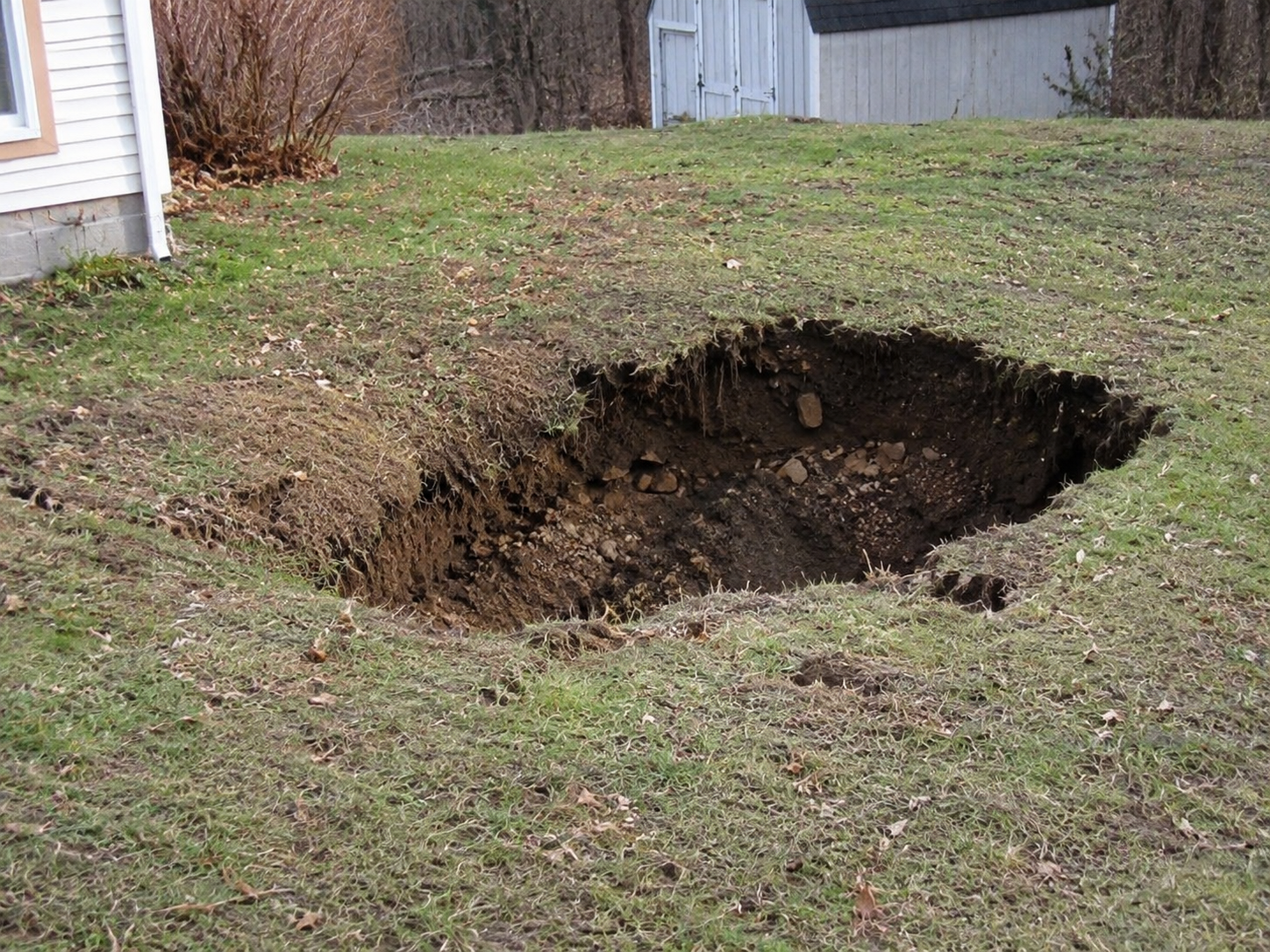
Mine subsidence is ground movement caused by the collapse of an underground mine. The Pennsylvania Department of Environmental Protection defines it as the movement of the ground surface due to the collapse of underground coal or clay mines. It shows up in two common forms. One is a sudden hole at the surface, and the other is a trough, where a wider area slowly sags.
The cause is what was left behind when the mines closed. Anthracite was mined by removing coal and leaving pillars of it standing to hold up the roof. Decades later those pillars and the rock above them can give way, and the ground over them follows. DEP notes that many things can trigger it, including heavy rain, and that no device can predict when a subsidence will occur.
The scale is statewide. DEP states that millions of structures in Pennsylvania are located over old, abandoned underground coal and clay mines, and that coal deposits and abandoned mines are found in 43 of the state’s 67 counties. For a buyer, that means mining history is a routine item to check, the same way you would check a flood map.
Schedule a Home Inspection Now
Which parts of NEPA sit over old mine workings?
The Wyoming Valley and the Lackawanna Valley sit over extensive old workings, because they were the heart of the Northern Anthracite Field. That band runs from the Scranton area down through Pittston, Wilkes-Barre, and Nanticoke, with towns on both sides of the Susquehanna built directly above the seams. DEP has said that much of the Anthracite Coal Region has been undermined and has subsidence potential.
It still happens. In April 2024, WVIA News reported that a mine void opened under Toby Creek in Luzerne Borough and that holes opened in yards on two streets in Swoyersville the same week. DEP’s Bureau of Abandoned Mine Reclamation filled them, and the report noted that many of the affected locations on the west side of the Wyoming Valley are above abandoned mines.
Mining history varies block by block, so a town name is not an answer. One street can sit over mapped workings while the next sits over solid ground or over a seam that was never recorded. Mountain to Valley inspects homes across both valleys, including Wilkes-Barre, Forty Fort, Pittston, Nanticoke, and Scranton, and the advice is the same in each. Check the specific address.
Schedule a Home Inspection Now
How do you check if a house is over an old mine?
Check the address on DEP’s free online map, which takes about two minutes. The tool is the Mine Subsidence Insurance risk map. Enter the street address, or pick the county and municipality, and select Check Mining Conditions. The map shades the area by what the state knows about mining beneath it.
| Map result | What it means | What to do |
| Gray. Underground Mining Area | The site is over or near a known mined area, with a risk of mine subsidence or a mine water breakout. | DEP recommends Mine Subsidence Insurance. Look closely at the foundation findings in the inspection. |
| Pink. Coal Exists, Possibly Mined | Mineable coal is known to exist, but DEP has no record of whether it was mined. | Insurance is available. Treat the address as possibly undermined. |
| No shading | The address falls outside the mapped mining and coal areas. | Lower concern, but the map is only as complete as the old records behind it. |
Two cautions apply. DEP states that the mining information is based on maps and plans from various sources and that it assumes no responsibility for their accuracy or completeness, so an unshaded result is not a guarantee. For a closer look, the Pennsylvania Mine Map Atlas, run by Penn State with DEP, holds more than 100,000 scanned mine maps that can be overlaid on a street address. For questions about a specific property, DEP’s Mine Subsidence Insurance line is 1-800-922-1678.
Schedule a Home Inspection Now
What are the warning signs of mine subsidence in a house?
The warning signs are cracks, tilting, and openings that no longer fit. DEP’s Mine Subsidence Insurance brochure lists the typical damage as follows.
- A foundation that cracks or tilts out of level.
- Cracks in walls, floors, and ceilings.
- Doors and windows that jam.
- Roofs and chimneys that crack and separate from the structure.
The difficulty is that ordinary settlement, frost, and poor drainage cause the same symptoms. A stair-step crack in a block wall does not prove subsidence, and many foundation cracks have ordinary causes. What raises concern is a pattern, meaning several of these signs together, damage that appeared quickly, or cracks that keep widening. Our guides on when to worry about cracks in a foundation and the 9 signs of foundation damage explain how to read them.
Schedule a Home Inspection Now
What can a home inspection tell you about mine subsidence?
A home inspection can tell you whether the house shows signs of movement, and it cannot tell you what is under the ground. Under the InterNACHI Standards of Practice, the inspector inspects the foundation, basement, crawl space, and structural components and reports observed indications of possible foundation movement, such as sheetrock cracks, brick cracks, out-of-square door frames, and unlevel floors. The same standards state that the inspector is not required to inspect or identify geological, geotechnical, hydrological, or soil conditions, or to provide any engineering service.
| Question | Who answers it |
| Does the house show signs of movement? | The home inspector, with photos of each finding |
| Is the address over known or possible mine workings? | DEP’s risk map and the Pennsylvania Mine Map Atlas |
| Is the movement active, and what caused it? | A licensed structural or geotechnical engineer |
| Is damage covered? | DEP’s Mine Subsidence Insurance program, never the standard homeowners policy |
That split is why the map check and the inspection belong together. If the address is shaded and the report shows movement, bring in a structural engineer before your contingency deadline. If the address is shaded and the report is clean, you have a sound house in a mining area, which is a common situation in the valley. For what inspectors look at in detail, see foundation inspections in Northeast PA. Commercial buyers address mining history as part of a Phase I Environmental Site Assessment.
Schedule a Home Inspection Now
Does homeowners insurance cover mine subsidence, and what does state coverage cost?
Homeowners insurance does not cover mine subsidence. DEP states that standard homeowners insurance policies exclude damage caused by mine subsidence, which is why the state has run its own Mine Subsidence Insurance program since 1961. The coverage is inexpensive for what it protects.
| Item | What DEP’s program provides |
| Coverage available | $5,000 to $1,000,000. DEP suggests insuring the home for its replacement value plus 20 percent. |
| Cost | $28.75 a year for $100,000, $41.25 a year for $150,000, and $53.75 a year for $200,000 of residential coverage |
| Senior discount | 10 percent off for homeowners 65 and older on a primary residence |
| Covered | The building, plus features such as driveways, fences, and in-ground pools up to 10 percent of the coverage amount, and incidental costs such as temporary relocation |
| Also covered | Certain damage from a sudden mine water breakout |
| Not covered | Personal belongings, grounds, and sinkholes caused by limestone. A detached garage needs its own policy. |
| When it starts | The day you apply online, as long as payment arrives within 60 days |
Two details matter for buyers. DEP says you can apply once you have a purchase agreement or are applying for a mortgage, so coverage can be in place at closing. Buildings in areas with past or recent problems require an inspection by the program before coverage can be purchased, which is one more reason to apply early. In a shaded area, a policy that costs about $40 a year is the cheapest protection in the transaction.
Schedule a Home Inspection Now
What should buyers do before closing on a home in a mining area?
Buyers should treat mining history as a standard due diligence item and finish five steps before closing. Each one fits inside the inspection contingency period.
- Check the address. Run it through DEP’s risk map before you make an offer, or on the first day of your contingency period.
- Ask the seller in writing. Ask whether the property has had subsidence damage, a DEP claim, or a Mine Subsidence Insurance policy. Pennsylvania’s Seller Disclosure Law requires sellers to disclose known material defects.
- Get the home inspection. Read the foundation, basement, and structure findings first, and look at the photos.
- Call an engineer if the report shows movement. A structural engineer’s letter tells you whether the movement is old and stable or still active.
- Apply for Mine Subsidence Insurance. Do it as soon as you have a signed agreement, so the policy is active the day you own the house.
If the inspection or the engineer turns up real damage, it is negotiated like any other documented defect. The process is laid out in how to negotiate repairs after a home inspection in PA. Mining history is also one of several age-related risks covered in buying an older home in NEPA, and none of them is a reason to walk away from a sound house.
Schedule a Home Inspection Now
Check the map, then inspect the house
Mine subsidence is part of buying a home in coal country, and it is manageable. The map tells you what is known about the ground. The inspection tells you how the house is standing on it. The insurance covers what neither can predict. Mountain to Valley documents foundation and structural findings with photos on every inspection, so you and your engineer are looking at the same evidence.
Schedule a Home Inspection Now
FAQs
Is mine subsidence covered by homeowners insurance in Pennsylvania?
No. DEP states that standard homeowners insurance policies exclude damage caused by mine subsidence. Coverage comes from the state’s Mine Subsidence Insurance program, which DEP has run since 1961.
How much does Mine Subsidence Insurance cost?
DEP lists $41.25 a year for $150,000 of residential coverage, or about 27 cents per $1,000. Coverage is available from $5,000 to $1,000,000, and homeowners 65 and older receive a 10 percent discount on a primary residence.
How do I find out if my house is over an old mine?
Enter the address in DEP’s Mine Subsidence Insurance risk map at gis.dep.pa.gov/msiRisk. Gray shading means a known underground mining area and pink means coal exists and may have been mined. The Pennsylvania Mine Map Atlas at minemaps.psu.edu shows the scanned mine maps themselves.
Can a home inspector tell if a house has mine subsidence damage?
A home inspector reports signs of possible foundation movement, such as cracks, out-of-square door frames, and unlevel floors. Identifying the cause is outside a home inspection. That takes a structural or geotechnical engineer, along with the mining maps for the address.
Should I avoid buying a home over an old mine?
Not necessarily. DEP says millions of Pennsylvania structures sit over old mines, so it is a common condition and not a rare defect. Check the map, get the home inspected, call an engineer if the report shows movement, and carry Mine Subsidence Insurance.