
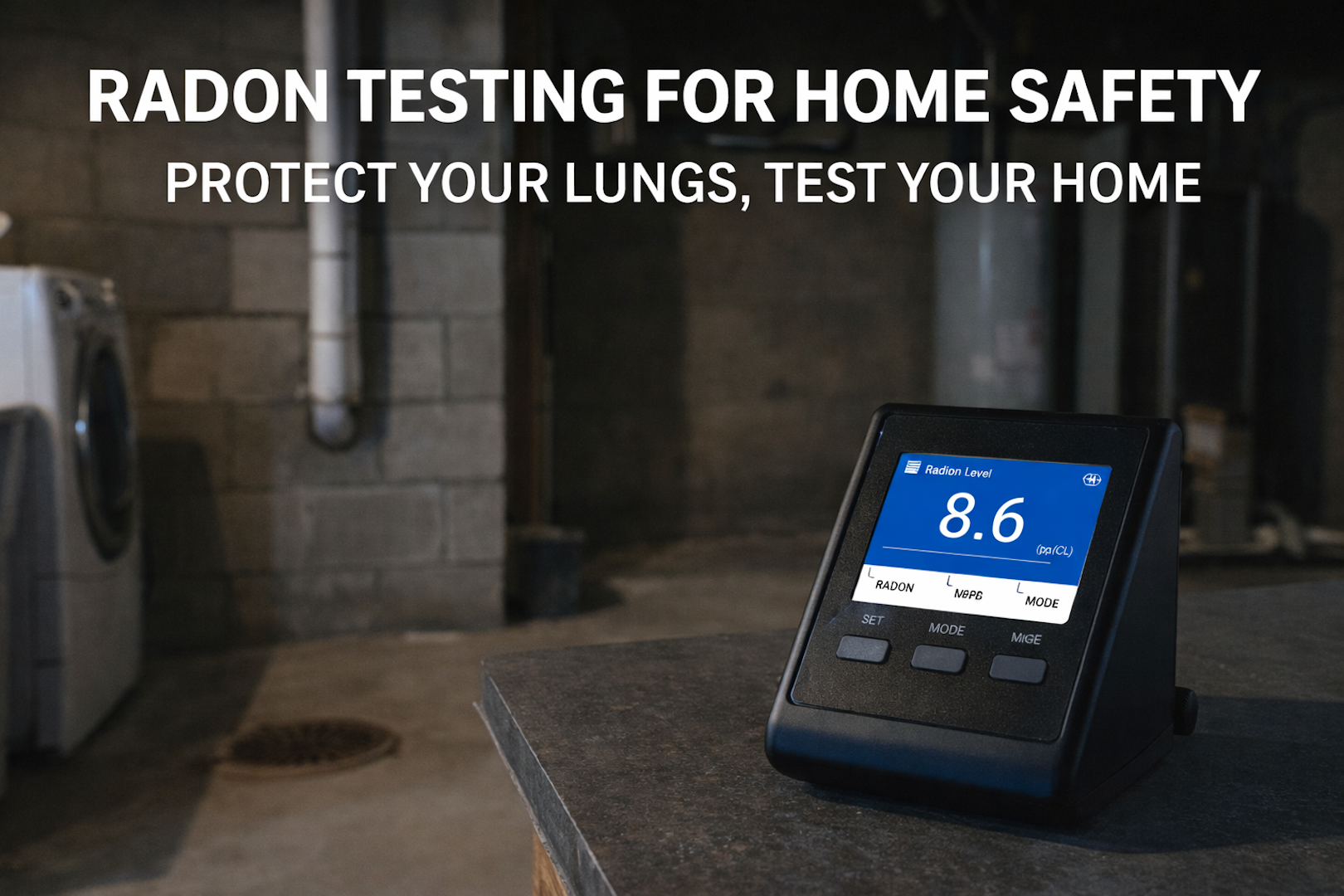
How to Test for Radon in NEPA: DIY vs. Professional Testing
Radon is one of the most overlooked health risks in residential homes, yet it’s also one of the most dangerous. You can’t see it, smell it, or taste it, but prolonged exposure is the second leading cause of lung cancer in the United States.
An estimated 40% of homes across Pennsylvania have radon levels above the EPA’s recommended action guideline of 4 picocuries per liter (pCi/L).
Professional radon testing provides the most accurate analysis of radon exposure across different levels of the home, where radon tends to be most concentrated on lower levels.
However, DIY and store-bought radon kits are available, but their results can vary and yield inaccurate estimates.
This guide walks through how radon testing works, when DIY testing is sufficient, when professional testing makes more sense, and how to decide which approach fits your situation.
What Is Radon and Why Testing Matters
Radon is a naturally occurring radioactive gas that forms when uranium decays in soil and rock. It moves upward through the ground and can enter homes through cracks in foundations, sump pits, crawl spaces, floor drains, and construction joints.
Once inside, radon can accumulate to dangerous levels, especially in lower areas like basements and crawl spaces. Because radon exposure happens over time, homeowners often don’t realize there’s a problem until elevated levels are discovered through testing.
Testing is the only way to know if radon is present in your home at unsafe levels. The Environmental Protection Agency (EPA) recommends action if radon levels are 4.0 picocuries per liter (pCi/L) or higher, though even lower levels carry some risk.
How Common Is Radon in Northeast Pennsylvania?
Radon is very common in Northeast Pennsylvania due to regional geology. Areas with shale, granite, and uranium-rich rock formations naturally produce higher levels of radon gas. Combine that with older housing stock, basements, and fluctuating seasonal pressure changes, and many homes unknowingly trap radon indoors.
What makes radon particularly challenging is that elevated levels can vary dramatically from house to house—even on the same street. Two neighboring homes built at the same time can test very differently based on foundation type, soil composition, and ventilation patterns.
Because radon levels are so location-specific, regional averages don’t provide protection. Individual testing is the only reliable way to assess risk in your specific home.
How Radon Testing Works
Radon testing measures the concentration of radon gas in indoor air over a defined period of time. Tests fall into two broad categories:
- Short-term tests (2–7 days)
- Long-term tests (90 days to 12 months)
Short-term tests are commonly used for real estate transactions or initial screening. Long-term tests provide a more accurate picture of average exposure over time, accounting for seasonal changes.
Both DIY kits and professional services use these same testing principles, but the difference lies in how the test is deployed, monitored, and interpreted.
How Accurate Is DIY Radon Testing?
DIY radon testing can be accurate when done correctly, but results are highly sensitive to placement and testing conditions. Most DIY kits use charcoal canisters, alpha track detectors, or consumer-grade digital monitors. These devices absorb or detect radon over time and either display a reading or require lab analysis.
Accuracy depends on following instructions precisely. Tests must be placed in the lowest livable level of the home, away from drafts, windows, exterior walls, and high-humidity areas.
The challenge is that small mistakes can skew results. A test placed too close to a sump pit, HVAC vent, or exterior wall may over- or under-report levels.
DIY tests also can’t detect whether environmental conditions changed during testing, such as a window being opened or a pressure shift caused by weather.
DIY testing works best as a screening tool, but nothing more. It can tell you whether radon is likely present and whether further testing is needed.
DIY vs. Professional Radon Testing: Key Differences
The following table discusses the pros and cons of professional radon testing vs. DIY kits.
| Factor | DIY Testing | Professional Testing |
| Cost | Lower | Higher |
| Accuracy | Variable | High |
| Ease | Simple | Hands-off |
| Interpretation | Homeowner responsibility | Expert guidance |
| Real estate use | Often not accepted | Widely accepted |
| Monitoring | Limited | Continuous & verified |
Professional testing is always recommended when there is any suspicion of radon present on the property or a real estate transaction is made to guarantee accurate results.
When to Invest in Professional Radon Testing?
Professional testing is commonly recommended for many scenarios where proper evaluation and documentation are essential:
- Buying or selling a home
- Finishing a basement or changing HVAC systems
- DIY results are near or above 4.0 pCi/L
- Long-term health exposure is a concern
- Documentation is required for lenders or negotiations
Instead of leaving interpretation to the homeowner, professional testing provides clear next steps if mitigation is needed.
What to Do If Radon Levels Are High
If testing shows radon levels at or above 4.0 pCi/L, mitigation is recommended. Radon mitigation systems typically involve sub-slab depressurization, which redirects radon gas safely outside before it enters the home.
Even if levels are between 2.0 and 4.0 pCi/L, many homeowners choose mitigation as a preventative measure, especially in homes with finished basements or long-term occupancy.
Choosing the Right Testing Approach
DIY radon testing is a good starting point for homeowners who want basic awareness and are comfortable following instructions carefully, but it should never be relied on as a true diagnostic tool. Professional testing is the better option when accuracy, documentation, or expert interpretation matters, especially since radon levels are significantly elevated in Northeast PA.
The last thing any future homeowner wants is to purchase a home with elevated radon for years without knowing of the exposure. Invest in professional radon testing to protect your health and gain peace of mind.
FAQs: How to Test for Radon
How long does a radon test take?
Short-term tests take 2–7 days. Professional tests typically run for 48 hours. Long-term tests may last several months.
Can I test for radon myself and trust the results?
Yes, if the test is placed correctly and instructions are followed. However, borderline or high results should be confirmed with additional or professional testing.
Is professional radon testing worth the cost?
Professional testing provides higher accuracy, tamper detection, and expert interpretation, which is especially important for real estate transactions or health-related concerns.
Where should a radon test be placed?
Tests should be placed in the lowest livable level of the home, away from drafts, windows, exterior walls, and high-humidity areas.
Do new homes need radon testing?
Yes. New construction can still have elevated radon levels depending on soil conditions and building design.
Can weather affect radon test results?
Yes. Heavy rain, snow cover, and seasonal pressure changes can influence radon levels, which is why long-term or repeated testing is often recommended.
What radon level is considered dangerous?
The EPA recommends mitigation at 4.0 pCi/L or higher, though no level is completely risk-free.
If my neighbor has high radon, will I too?
Not necessarily. Radon levels can vary significantly between nearby homes due to soil, foundation type, and ventilation.


Do I Really Need a Home Inspection in NEPA?
Buying or owning a home in Northeast Pennsylvania comes with challenges that aren’t always obvious at first glance. Many properties in NEPA are older, built on varied terrain, and exposed to decades of weather, freeze–thaw cycles, and moisture intrusion.
It can be easy to overlook these issues in exchange for a more affordable home in your price range, but that cost will be reclaimed somewhere along the line.
Getting a home inspection is essential for diagnosing costly issues that could impact your safety and wallet, and it’s also a helpful tool for getting pricing that reflects the home’s actual condition.
We’ve had several homeowners come to us after purchasing a house and discovering an issue that wasn’t disclosed to them, to uncover what else might be waiting for them.
Don’t skip a home inspection on your next real estate purchase in NEPA. Learn more about why home inspections are essential and why every party–buyers, sellers, and owners–should get one.
What Is and Is Not Included In a Home Inspection?
A home inspection is a comprehensive evaluation of a property’s major systems and structural components. The inspector’s role is to identify visible defects, safety concerns, and signs of deterioration, but they cannot guarantee perfection or predict future failures.
A standard home inspection typically includes an evaluation and description of the following components:
- Roof and exterior surfaces
- Foundation and structural components
- Basement or crawl space conditions
- Electrical, plumbing, and HVAC systems
- Attic insulation and ventilation
- Windows, doors, and interior finishes
Inspectors use advanced tools, including thermal moisture meters, roof drones, and other diagnostic tools, to assess critical components of the home.
However, home inspections can only go so far in uncovering common issues and typically address only major structural components.
Water and air quality, radon, septic systems, and termite damage often require specialized tools and inspection processes to assess their condition.
Why Home Inspections Matter in NEPA
Home inspections are important for any property, regardless of its location, age, or condition.
However, homes in Northeast Pennsylvania face local environmental conditions that make inspections especially valuable. Many properties were built decades ago, often before modern waterproofing, insulation, or drainage standards were common, leaving them susceptible to erosion, poor ventilation, and age-related distress.
Several homes throughout the valley and the Poconos still have outdated knob-and-tube wiring, inefficient energy systems, and DIY modifications that don’t meet modern safety standards.
Benefits of a Home Inspection for Buyers and Sellers
A professional home inspection reduces risk for everyone involved in a real estate transaction and helps price the property more accurately.
Home inspections aren’t just used exclusively by buyers; they help at every stage of the home transaction process.
For buyers, a home inspection helps by:
- Revealing the true condition of the home. Inspections go beyond cosmetic finishes to evaluate structure, roofing, electrical, plumbing, HVAC, drainage, and safety systems.
- Clarifying future costs. Understanding what needs attention now versus later helps buyers budget realistically and avoid unexpected repair expenses.
- Reducing emotional decision-making. Objective findings replace guesswork, allowing buyers to make informed choices rather than relying on appearances.
- Supporting negotiation leverage. Verified inspection findings can justify repair requests or price adjustments without speculation.
For sellers, a home inspection provides value by:
- Minimizing last-minute surprises. Identifying issues early prevents deal disruptions late in the transaction.
- Allowing proactive repairs or disclosures. Sellers retain control over how issues are addressed rather than reacting under time pressure.
- Improving buyer confidence. Transparency builds trust and reduces hesitation, especially with out-of-area or first-time buyers.
- Helping transactions close faster. Fewer unknowns typically lead to smoother negotiations and fewer delays.
When Is a Home Inspection Recommended?
In Northeast Pennsylvania, inspections are recommended any time a property is changing hands or undergoing a major decision that affects safety, value, or long-term ownership.
We strongly recommend a home inspection for any of the following circumstances to get an unbiased view of its condition, value, and any pertinent safety concerns:
- Buying a home. Inspections uncover hidden defects that aren’t visible during showings, especially in basements, attics, and mechanical systems common in NEPA homes.
- Selling a home. Pre-listing inspections help sellers identify issues early, avoid renegotiations, and price the home accurately.
- Purchasing an older property. Many homes in NEPA were built decades ago and may include outdated wiring, aging foundations, or legacy drainage systems.
- Buying without recent inspection history. Even well-maintained homes can have deferred maintenance that isn’t obvious without a formal evaluation.
- Finishing a basement or remodeling. Inspections can identify moisture, ventilation, or structural issues that should be addressed before investing further.
- After major weather events. Heavy rain, flooding, or freeze-thaw cycles can create problems that weren’t previously present.
- Buying from out of the area. Remote buyers often rely on inspections to understand local construction standards, soil conditions, and environmental risks.
In many instances, a home inspection can be used to identify or rule out major repairs when working with a contractor.
Next Steps After a Home Inspection
A home inspection report provides a roadmap that helps buyers and sellers decide how to move forward with clarity.
After receiving a home inspection, the typical next steps include:
- Reviewing the report carefully. Focus on safety issues, structural concerns, water intrusion, electrical problems, and major mechanical systems rather than minor cosmetic items.
- Prioritizing findings. Not every issue requires immediate action. Understanding what affects safety, longevity, or resale value helps guide decisions.
- Consulting specialists if needed. Inspectors identify concerns but may recommend licensed professionals for further evaluation or repair estimates.
- Negotiating repairs or credits. Buyers may request repairs, price adjustments, or closing credits based on verified inspection findings.
- Planning future maintenance. Even if no negotiations occur, inspection results help homeowners plan upgrades and preventive maintenance.
- Deciding whether to proceed. In rare cases, inspections reveal issues significant enough to reconsider the purchase altogether.
For sellers, inspection findings often guide strategic repairs or disclosures that prevent delays and keep transactions on track.
A home inspection may seem like an added cost, but the return on investment can be massive, depending on the extent of future repairs and improvements needed to the property you’re buying, selling, or maintaining.
FAQs
Do I legally need a home inspection in Pennsylvania?
No. Home inspections are not legally required, but they are strongly recommended to protect buyers and homeowners from unknown defects.
How long does a home inspection take?
Most inspections take 2–4 hours, depending on the size, age, and condition of the home.
Will a home inspection find basement water problems?
Yes. Inspectors look for moisture stains, efflorescence, grading issues, and foundation cracks that suggest current or past water intrusion.
Can a home inspection replace a structural engineer?
No. Inspectors identify concerns, but structural engineers are needed for detailed analysis of major structural issues.
Are inspections different for older homes?
Yes. Older homes often require closer attention to foundations, electrical systems, plumbing materials, and insulation.
Should I get an inspection on a newly built home?
Yes. New homes can still have construction defects, grading issues, or drainage problems that only appear after occupancy.
Do inspectors test for radon or mold automatically?
Not usually. Radon, mold, and pest inspections are typically separate services unless specifically requested.
Is a home inspection worth it if I’m buying “as-is”?
Absolutely. An inspection helps you understand what “as-is” really means before you commit.