
Yes. A home inspection includes the chimney and fireplace, within defined limits. Your inspector checks the readily accessible and visible parts, from the masonry and cap outside to the firebox and damper inside, and reports what needs correction. What a home inspection does not include is the inside of the flue, and in Northeastern Pennsylvania’s coal-era homes, that is where the expensive problems hide.
That limit matters most right now. Fireplace season in NEPA starts in November, and a chimney that sat unused all summer is about to carry heat, smoke, and combustion gases again. This guide covers what inspectors check, what falls outside a home inspection, why older NEPA chimneys carry more risk, the two real dangers, how wood stoves and inserts are handled, and when to order a Level 2 chimney inspection before you close.
 What does a home inspector check on a chimney and fireplace?
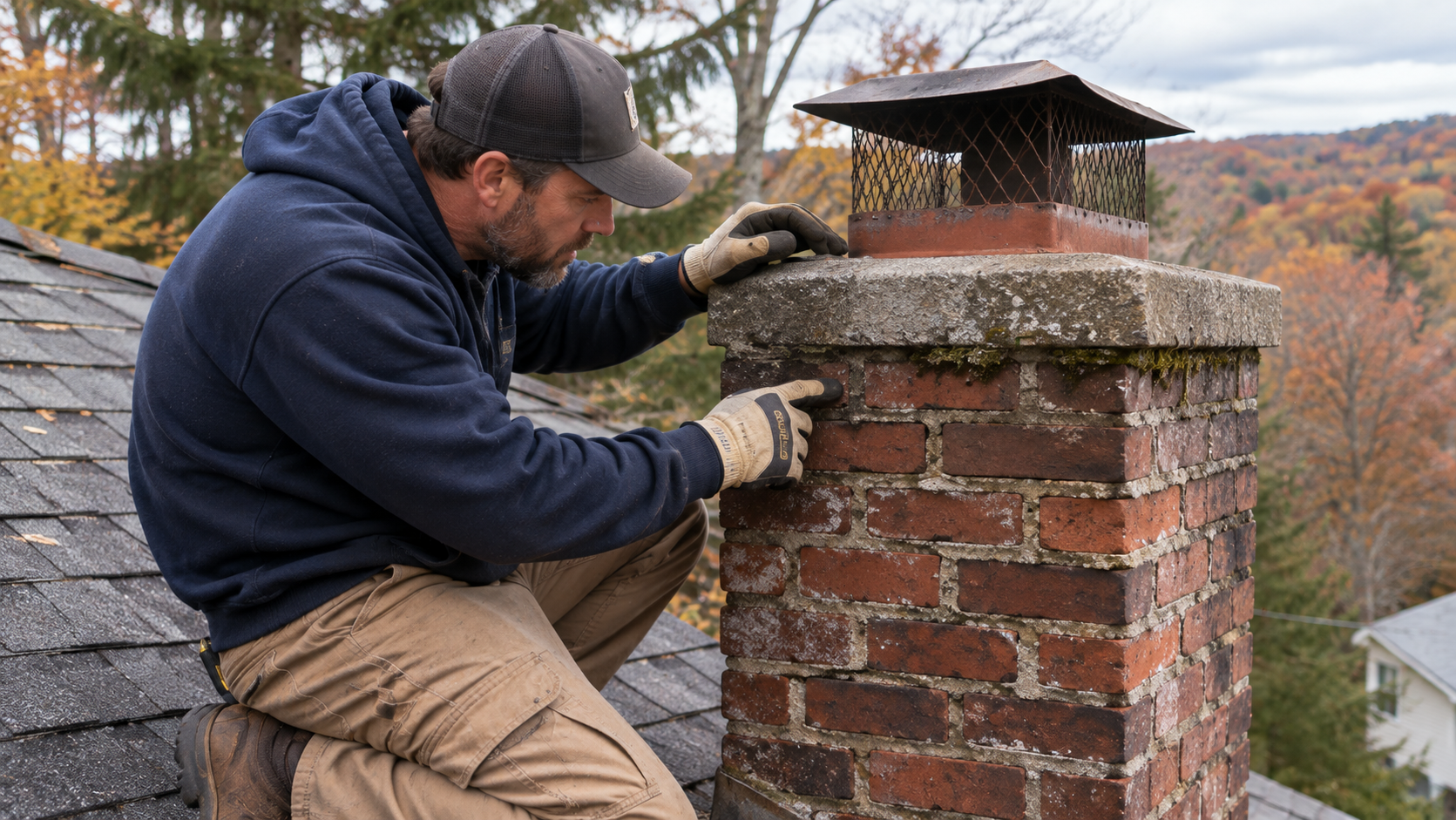
A home inspector checks every part of the chimney and fireplace that can be seen and reached without tools or dismantling. Under the InterNACHI Standards of Practice, the inspector inspects the readily accessible and visible portions of the fireplaces and chimneys, the lintels above the fireplace openings, the damper doors, and the cleanout doors and frames. The chimney is also viewed from outside as part of the roof, along with its flashing. At a NEPA home, that covers the following.
- Exterior masonry. Cracked or spalling brick, missing mortar, leaning, and staining.
- Crown and cap. The concrete crown that sheds water and the cap that keeps rain and animals out.
- Flashing. The metal seal where the chimney meets the roof, which is a common leak point.
- Firebox and hearth. Joint separation, damaged firebrick, and deterioration of the hearth or hearth extension.
- Damper. Opened and closed when it is accessible and manually operable.
- Visible flue opening. Obvious blockage, heavy soot, or missing liner that can be seen from the firebox with a flashlight, without a camera.
- Clearances and alarms. Combustibles too close to the opening, and whether smoke and carbon monoxide alarms are present in the room.
The standards also tell the inspector what to report as needing correction. That list includes joint separation or damage in the hearth and firebox, a damper that will not open and close, and the lack of a smoke detector or carbon monoxide detector in the same room as the fireplace. Each finding goes into the report with photos. On steep or tall roofs, Mountain to Valley uses a drone under FAA certificate #4118345 to photograph the crown, cap, and flashing, the same way we handle a roof inspection during a home inspection.
What does a home inspection not cover on the chimney?
A home inspection does not cover the interior of the flue. The InterNACHI standards state that the inspector is not required to inspect the flue or vent system, inspect the interior of chimneys or flues, determine the need for a chimney sweep, perform a smoke test, or perform an NFPA-style inspection. The reason is practical. Most of a flue is hidden inside the masonry, and seeing it takes a camera and a trained chimney professional.
The NFPA-style inspection the standards refer to comes from NFPA 211, the national standard for chimneys, fireplaces, and vents. It defines three levels of inspection, which the Chimney Safety Institute of America summarizes for homeowners. The table shows how a home inspection compares with each level.
| Inspection | What it covers | When it applies |
| Home inspection | Readily accessible and visible parts of the fireplace and chimney, damper operation, cleanouts, exterior masonry, cap, and flashing. No flue interior. | Every purchase, as part of the full inspection |
| Level 1 chimney inspection | Readily accessible parts of the chimney and its connections. Confirms the chimney is sound and free of obstructions and combustible deposits. | A chimney in continued service under the same conditions |
| Level 2 chimney inspection | Everything in Level 1, plus accessible attics, crawl spaces, and basements, clearances to combustibles, and the flue interior by video scan or other means. | Sale or transfer of a property, a change in fuel or appliance, or after a chimney fire or other damaging event |
| Level 3 chimney inspection | Everything in Levels 1 and 2, plus concealed areas, which can mean removing parts of the chimney or the building. | When a Level 1 or Level 2 points to a hidden hazard |
The two inspections work together. The home inspection tells you the chimney’s visible condition and whether anything points to a deeper problem. The Level 2 puts a camera through the flue and answers the question a home inspection cannot.
Why are older NEPA chimneys higher risk?
Older NEPA chimneys are higher risk because most were built for coal and have been asked to do different jobs since. A chimney that vented a coal furnace in 1925 may now serve an oil boiler, a gas water heater, a wood stove, or nothing at all. Each change affects how the flue performs, and few of those changes came with an inspection.
- Unlined flues. Many coal-era chimneys were built with bare brick and no clay tile or metal liner. Without a liner, heat and gases reach the masonry and the framing around it.
- Coal-to-oil and gas conversions. A flue sized for a coal furnace is often too large for a modern oil or gas appliance. Exhaust cools before it leaves, moisture condenses inside, and the acidic water eats the mortar from within.
- Deteriorated mortar. A century of freeze-thaw cycles opens joints and loosens brick, most visibly above the roofline.
- Abandoned flues. Chimneys left open after a heating upgrade let in water and animals, and an old flue is sometimes reused later without anyone checking it.
Clay flue tile is durable, but it does not last forever. InterNACHI’s life expectancy chart lists chimney flue tile at 40 to 120 years, a metal chimney cap at 10 to 20 years, and a mortar cap at about 15. In a home built before 1940, original tile is at or past that range. That is one reason chimneys sit alongside heating and old electrical wiring on the list of common issues when buying an older home in NEPA. Boroughs with dense pre-war housing, including Forty Fort and West Pittston, show these conditions often.
Why are creosote and carbon monoxide the two real dangers?
Creosote and carbon monoxide are the two real dangers because one starts fires and the other poisons people, and neither is visible from the living room. Creosote is the flammable residue that wood smoke leaves on flue walls. It builds with every fire, and once it ignites, a chimney fire can crack flue tile and spread to the framing.
The fire data are consistent. NFPA’s home heating fire research shows an average of 38,881 home heating equipment fires a year from 2019 through 2023, causing 432 deaths, 1,352 injuries, and $1.1 billion in property damage annually, with fires peaking between December and February. An earlier NFPA analysis of 2012 to 2016 data found that failure to clean equipment was the leading factor in home heating fires and that fireplaces or chimneys were involved in 32 percent of them.
Carbon monoxide is the second danger. The EPA lists leaking chimneys and furnaces, and back-drafting from furnaces, gas water heaters, wood stoves, and fireplaces, among the sources of carbon monoxide in homes. A blocked, oversized, or deteriorated flue lets exhaust spill back into the house instead of rising out of it. The same chimney often vents the heating system, so a flue problem is also a venting problem for the equipment covered in Does a Home Inspection Include the Furnace? That is why the standards have your inspector report a missing smoke or carbon monoxide detector in the fireplace room.
How are wood stoves, pellet stoves, and inserts inspected?
Wood stoves, pellet stoves, and fireplace inserts are inspected visually, with more limits than an open fireplace. The inspector reports the visible condition of the appliance, the hearth protection, the clearances to walls and furniture, and the visible connector pipe. Under the InterNACHI standards, the inspector is not required to move inserts or stoves, operate gas fireplace inserts, light pilot flames, ignite fires, or inspect automatic fuel-fed devices, a category that includes pellet stoves.
Inserts deserve extra attention because they hide the firebox and the flue connection behind a steel surround. An insert vented into an old, oversized masonry flue without a properly sized liner is a common setup in older homes and a known cause of heavy creosote. The only way to confirm how an insert is connected is to pull it or scan the flue, and both jobs belong to a chimney professional. If the stove or insert is a main heat source, ask the seller for the installation paperwork and the date of the last sweep.
When should you order a Level 2 chimney inspection before closing?
Order a Level 2 chimney inspection any time you are buying a home with a chimney you plan to use. NFPA 211 calls for a Level 2 upon the sale or transfer of a property, which makes a purchase the textbook case. The standard is not part of your Agreement of Sale, so nobody orders it for you. It has to be scheduled inside your inspection contingency period, alongside the home inspection.
A Level 2 moves from a good idea to a priority when the home inspection report shows any of the following.
- A home built before 1940, or any chimney with no visible liner.
- A fuel conversion, such as coal to oil, oil to gas, or a wood stove or insert added to an old fireplace.
- Cracked, spalling, or leaning masonry, or a damaged crown.
- Heavy soot or creosote visible in the firebox or at the damper.
- Water stains on the ceiling or walls near the chimney.
- No record of a sweep or inspection from the seller.
If the scan finds damaged tile or a missing liner, get a written estimate from the chimney company before your contingency deadline. A relining estimate attached to a repair request gives you the same footing as any other documented defect. The steps are the ones covered in how to negotiate repairs after a home inspection in PA.
Know the chimney before you light the first fire
A home inspection gives you the chimney’s visible condition, photos of the parts you cannot see from the ground, and a clear statement of what needs a specialist. Mountain to Valley inspects the chimney and fireplace on every home inspection under InterNACHI standards and uses a drone for crowns and caps that are unsafe to reach. If the report points to the flue, you will know in time to bring in a Level 2 before closing.
FAQs
Does a home inspection include the chimney?
Yes. Under InterNACHI standards the inspector inspects the readily accessible and visible portions of the fireplaces and chimneys, the damper, the lintels, and the cleanouts, and views the chimney and flashing from outside. The interior of the flue is not part of a home inspection.
Does a home inspector look inside the flue?
No. The InterNACHI standards state that the inspector is not required to inspect the flue or the interior of chimneys. A Level 2 chimney inspection by a chimney professional scans the flue interior with a camera.
Is a Level 2 chimney inspection required when buying a house in Pennsylvania?
NFPA 211 calls for a Level 2 inspection upon the sale or transfer of a property. It is a national standard, and it is not a step your Agreement of Sale triggers automatically, so the buyer needs to order it during the inspection contingency period.
How often should a chimney be cleaned and inspected?
NFPA recommends that heating systems and chimneys be cleaned and inspected every year by a qualified professional. Schedule it before fireplace season, since home heating fires peak between December and February.
Can I use a fireplace that has not been used in years?
Not until it has been inspected. An unused chimney can hold nests, fallen tile, or a deteriorated liner, and none of that is visible from the firebox. Have a chimney professional perform a Level 2 inspection before the first fire.